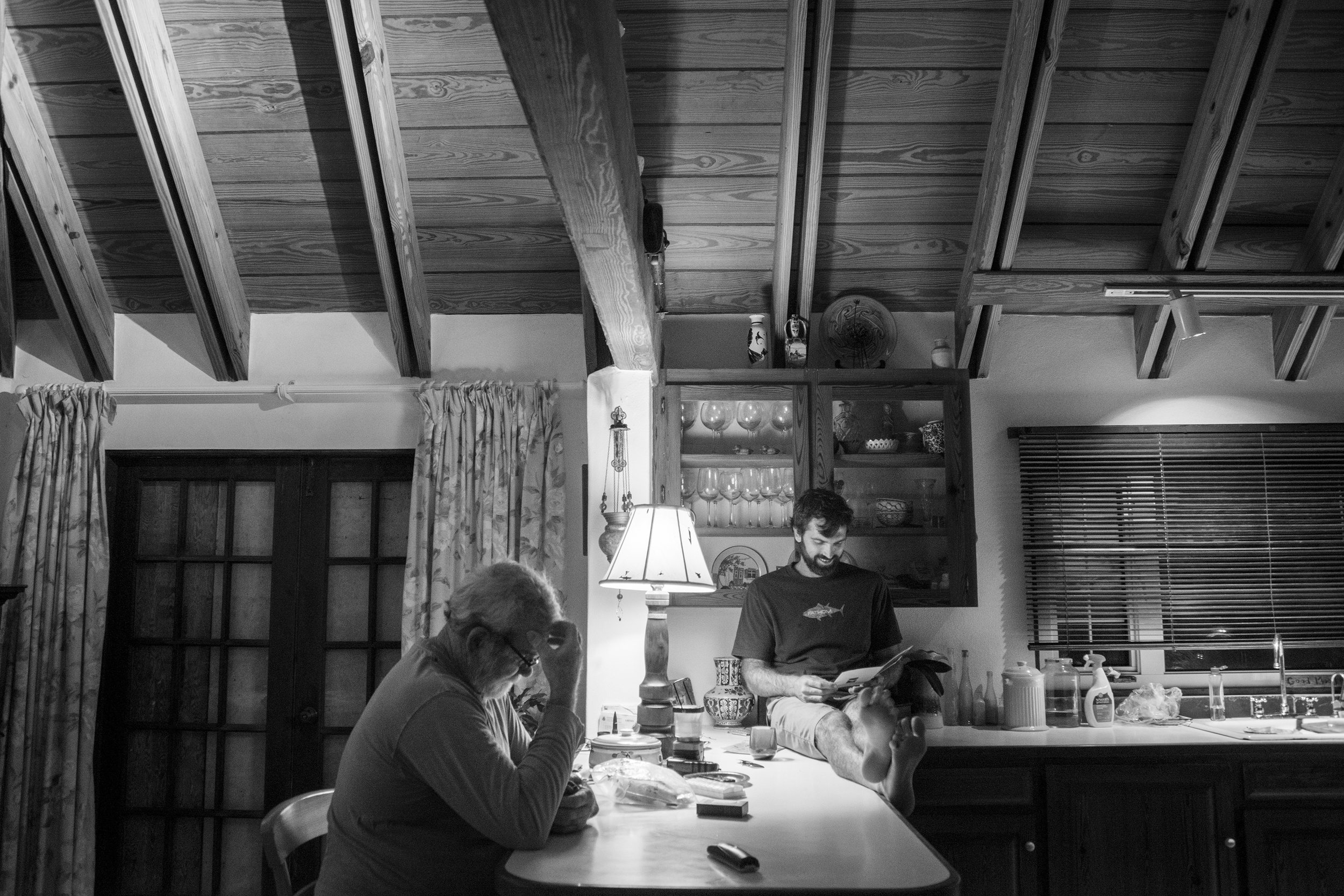
Photo Essay: Tropical Storm Karl - Bermuda
Well, it’s that time of year again. Time for plywood boards, drills, screws, flashlights, batteries, candles, and rum; it’s Atlantic Hurricane Season. This time frame somewhat coincides with the height of tourist and wedding season. Hurricane season typically starts June 1st and ends November 30th. Bermuda lucked out back in August when she (yes, the island is female) dodged two bullets with Tropical Storm Fiona and Hurricane Gaston, which has been the strongest hurricane of the year thus far (knock on wood). For a twenty-one square mile island – that sits 650 miles off the coast of North Carolina – it’s odd to think that most of the storms that make it to our side of the Atlantic usually form off the coast of Africa.
Well, it’s that time of year again. Time for plywood boards, drills, screws, flashlights, batteries, candles, and rum; it’s Atlantic Hurricane Season. This time-frame somewhat coincides with the height of tourist and wedding season. Hurricane season typically starts June 1st and ends November 30th. Bermuda lucked out back in August when she (yes, the island is female) dodged two bullets with Tropical Storm Fiona and Hurricane Gaston, which had been the strongest hurricane of the year thus far (knock on wood). For a twenty-one square mile island – that sits 650 miles off the coast of North Carolina – it’s odd to think that most of the storms that make it to our side of the Atlantic usually form off the coast of Africa.
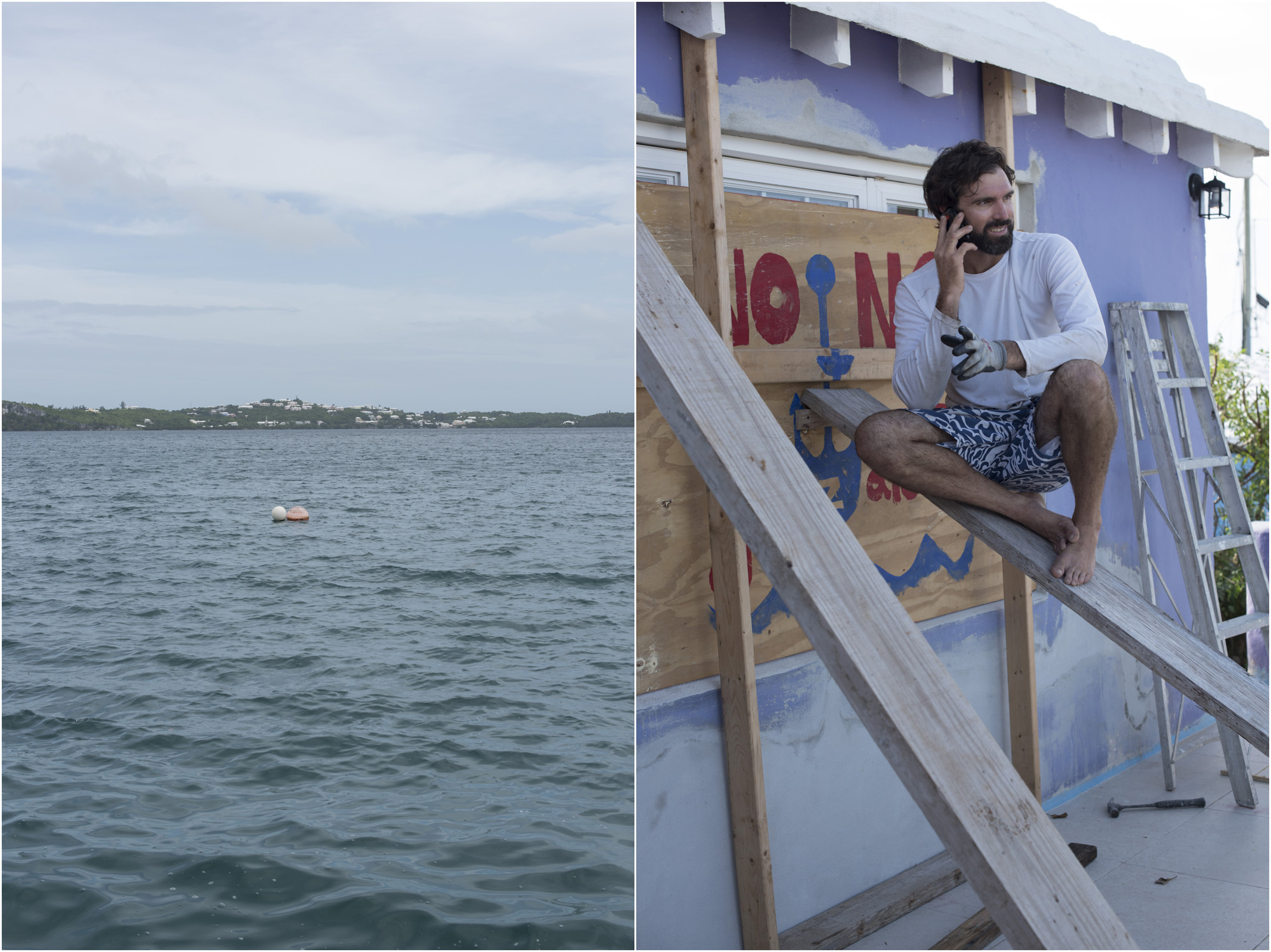
We first heard of Tropical Storm Karl on Jim’s birthday, September 15th; a lovely present from the universe - well, technically: a gift from Cape Verde, where Karl formed. We have two houses and two boats to take care of before a storm hits. The time before a storm is precious: it's a perfect opportunity for the island to get last minute chores done - like pruning trees that may snap or become uprooted during a storm. Preparation work for our family involves boarding up my in-laws' house, which sits right on the water facing northwest and our house, which sits up on top of a high hill, facing north. Along with our properties, Jim usually assists his Uncle Stephen with boarding up his house too.
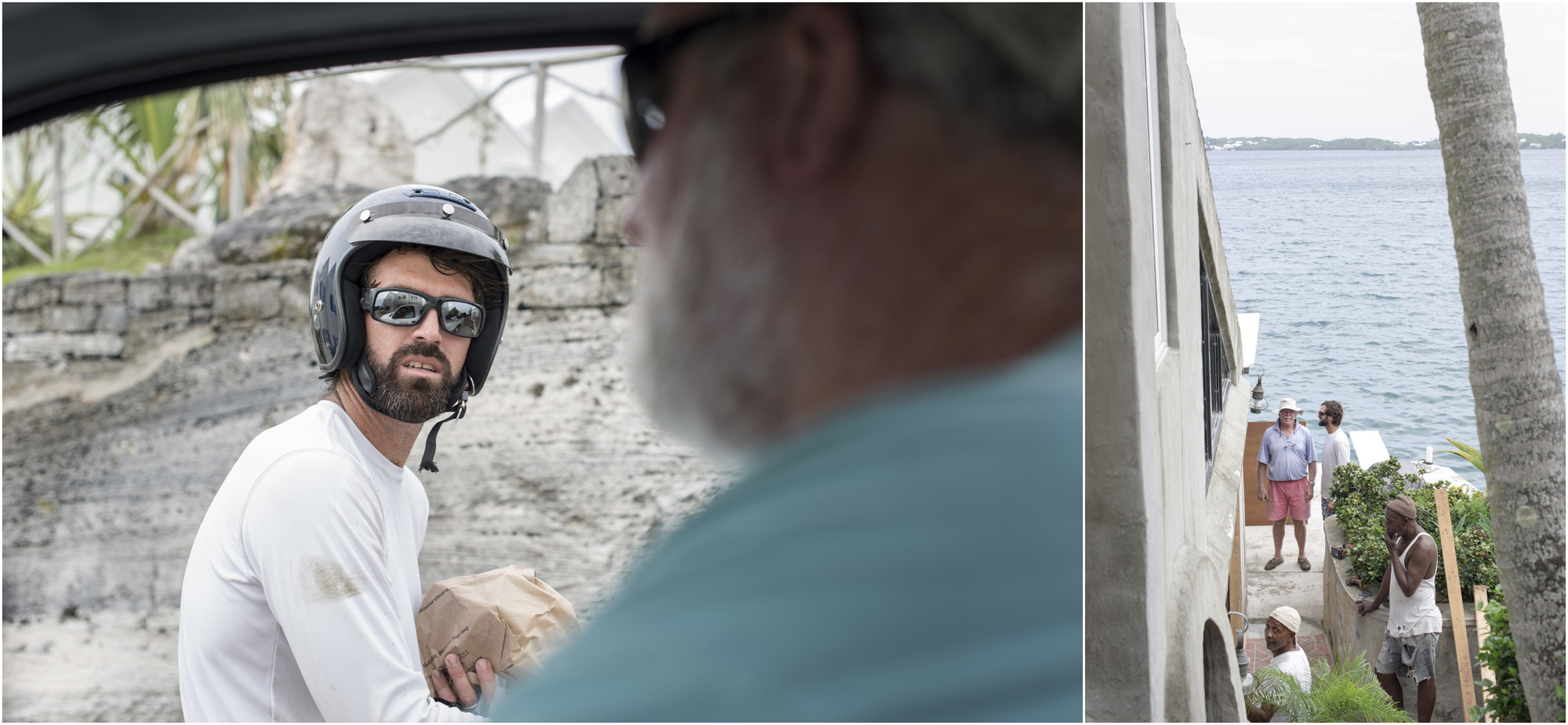
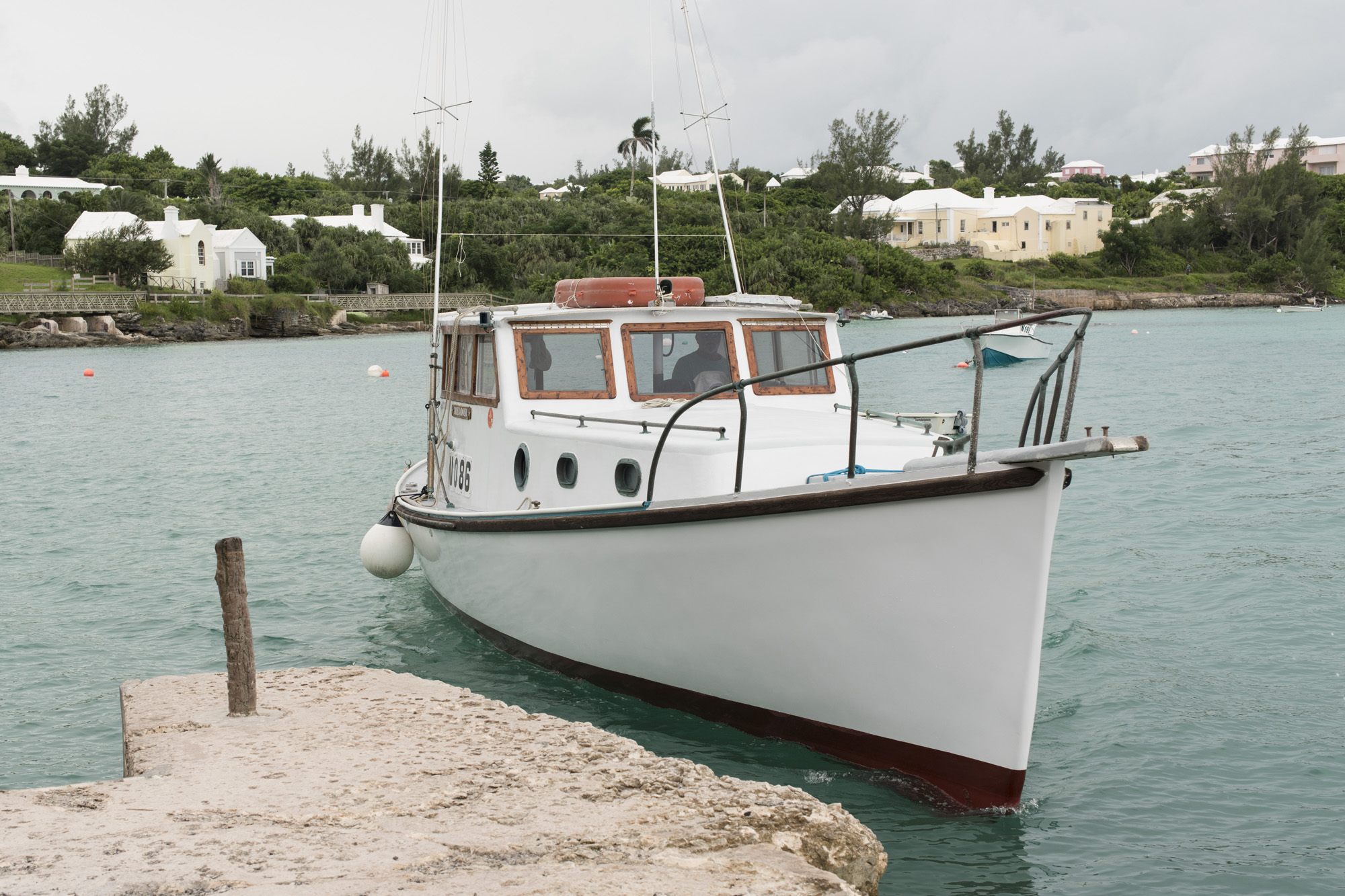
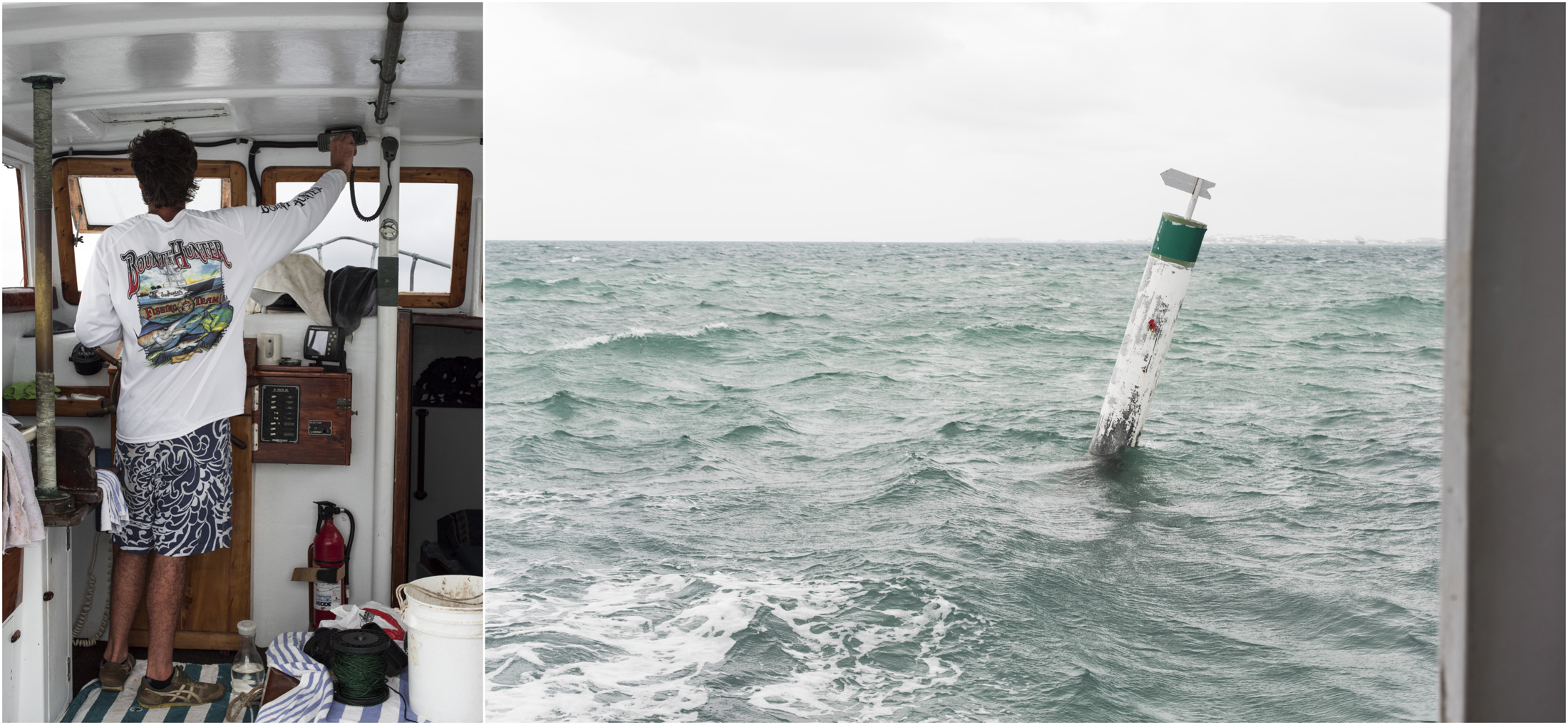
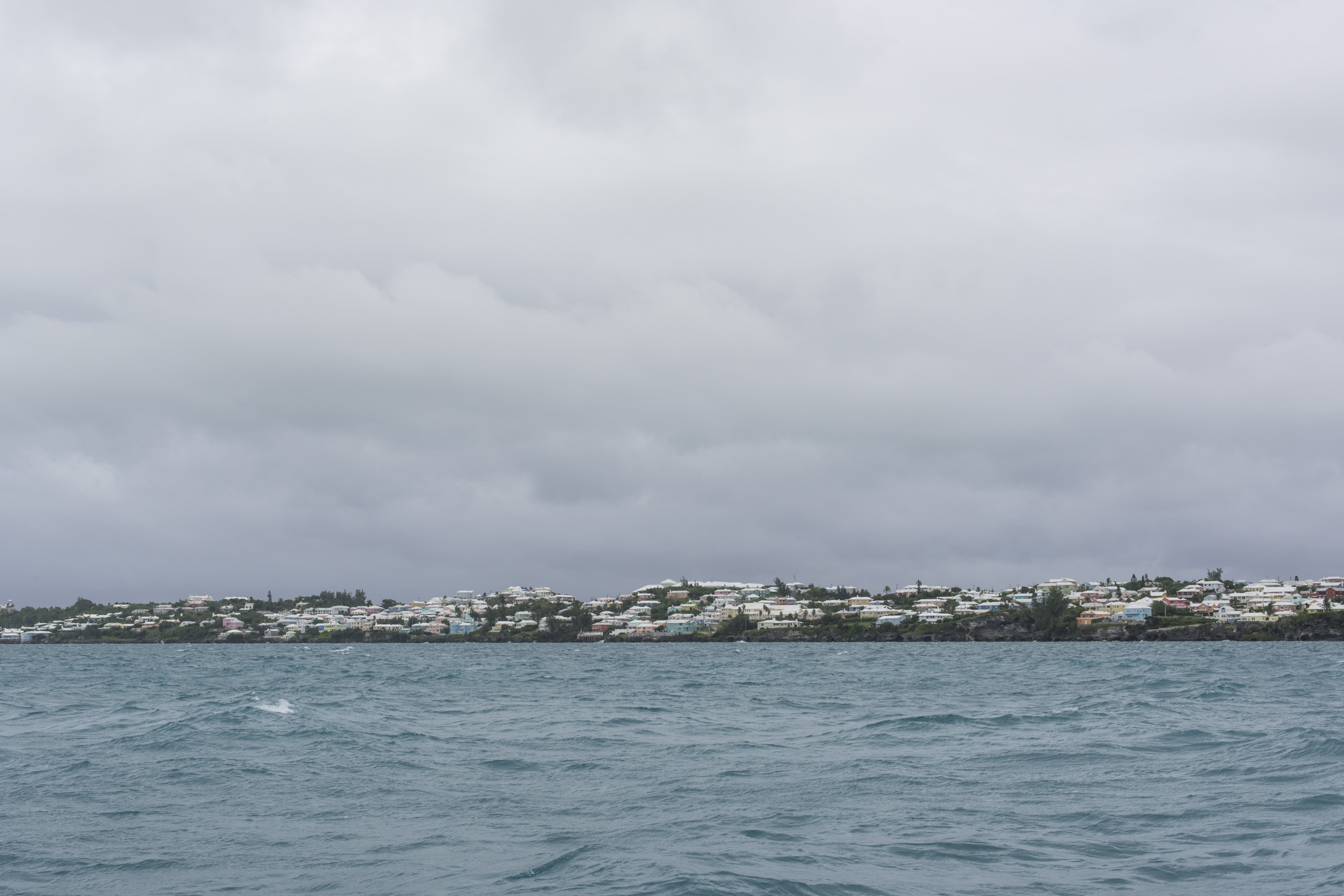
Depending on the direction of the wind, my husband and father-in-law will either leave their fishing boat, Troubadour, in Bailey’s Bay, where she's normally moored or put her in Mills Creek (yes, the boat is also female), where she's more protected from the wind. The downside of putting the fishing boat in Mills Creek is that there are a lot of surrounding vessels that could potentially come loose in a storm, hit our boat and/or catch on our moorings. After much debate, they decided that Troubadour should be moved. My father-in-law, Blake and I went up to Troubadour to prepare her for the journey to Mills Creek. From there, Jim and I hopped aboard and brought her up to the Creek with our punt in tow. Let me tell you; it was a bit rough! We saw one of the cruise ships heading out to sea just as we departed; a standard rule for all large ships when a big storm comes through. We made our way down the North Shore, passed Shelly Bay, Flatts, the Incinerator, Deep Bay, and we now needed to cross the channel to head into Spanish Point to get to Mills Creek.
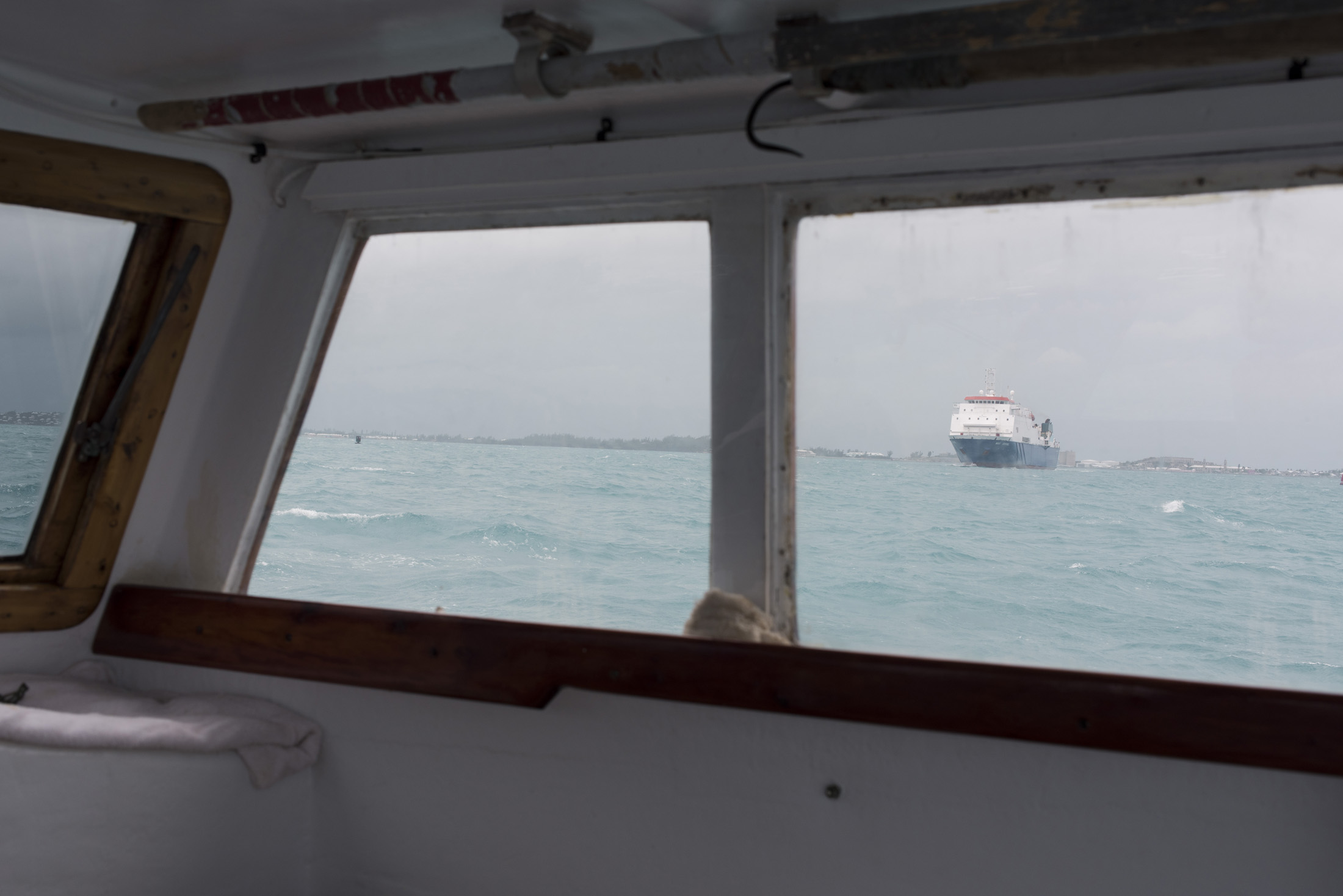
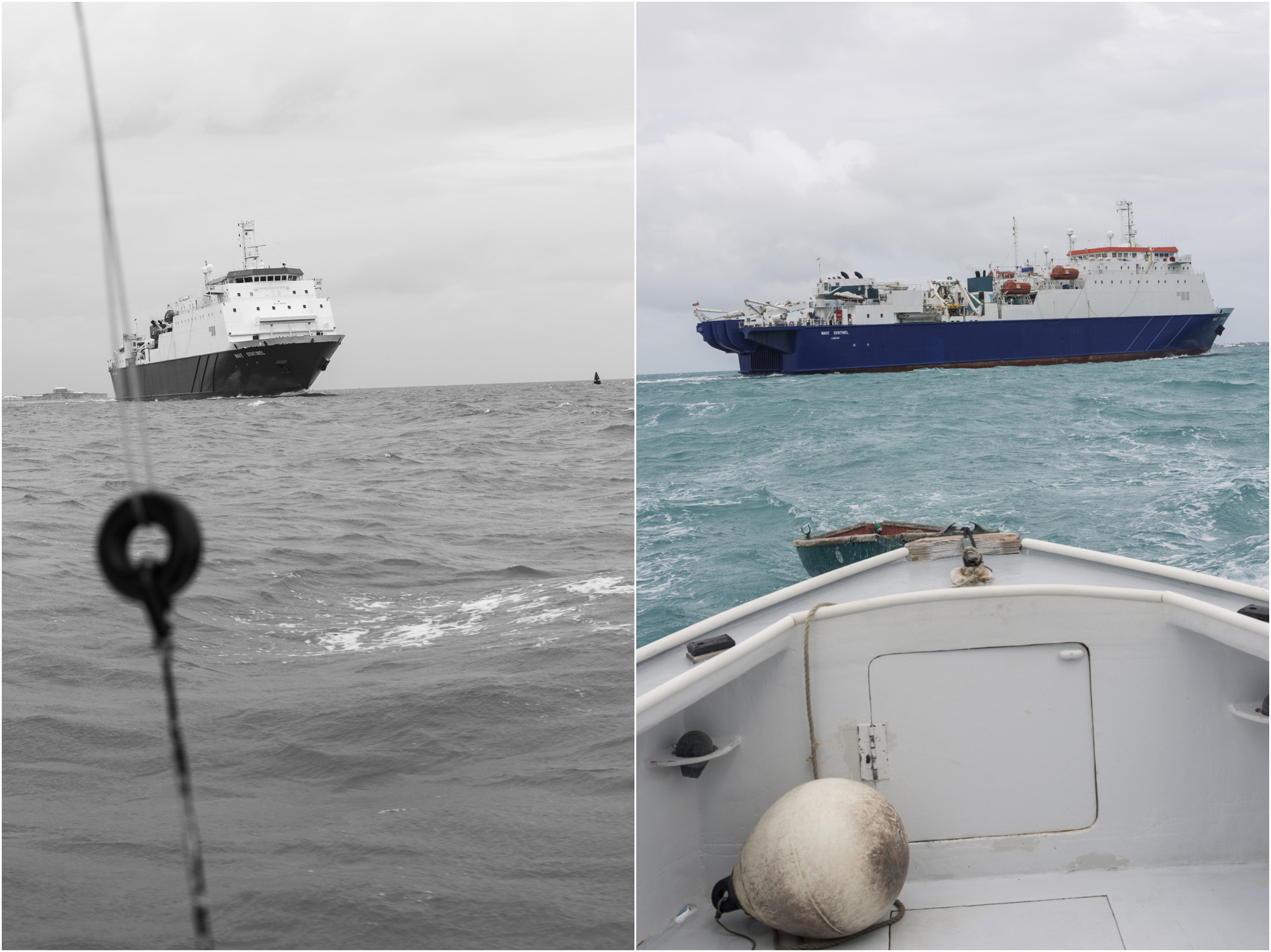
Coming from the opposite side of the channel was a massive cable ship, the Wave Sentinel. I didn’t think much of the ship until Jim said, “So… we need to cut in front of that cable ship”. I paused for a moment and thought, “Huh. We’re chugging along, and that ship is not that far away”. So I said to Jim in a very mildly panicked tone, “Is this as fast as our boat goes?” Jim chuckled and said, “No” so I said, “Well, let’s… put a move on it, eh?” - with my hands waving in the direction of the Point. For a brief moment, I thought about what we would do if we happened to collide with the cable ship: diving overboard with my Nikon around my neck became a semi viable option. Jim, being the fisherman that he is, knew we would make it across the channel with time to spare – so - instead of tossing myself, my husband, and camera into salt water, dodging sharks, lionfish, eels, and mermaids as we would swim to safety – I took more photos, waved to the ship, and the crew on deck waved back. It was all – very exciting.
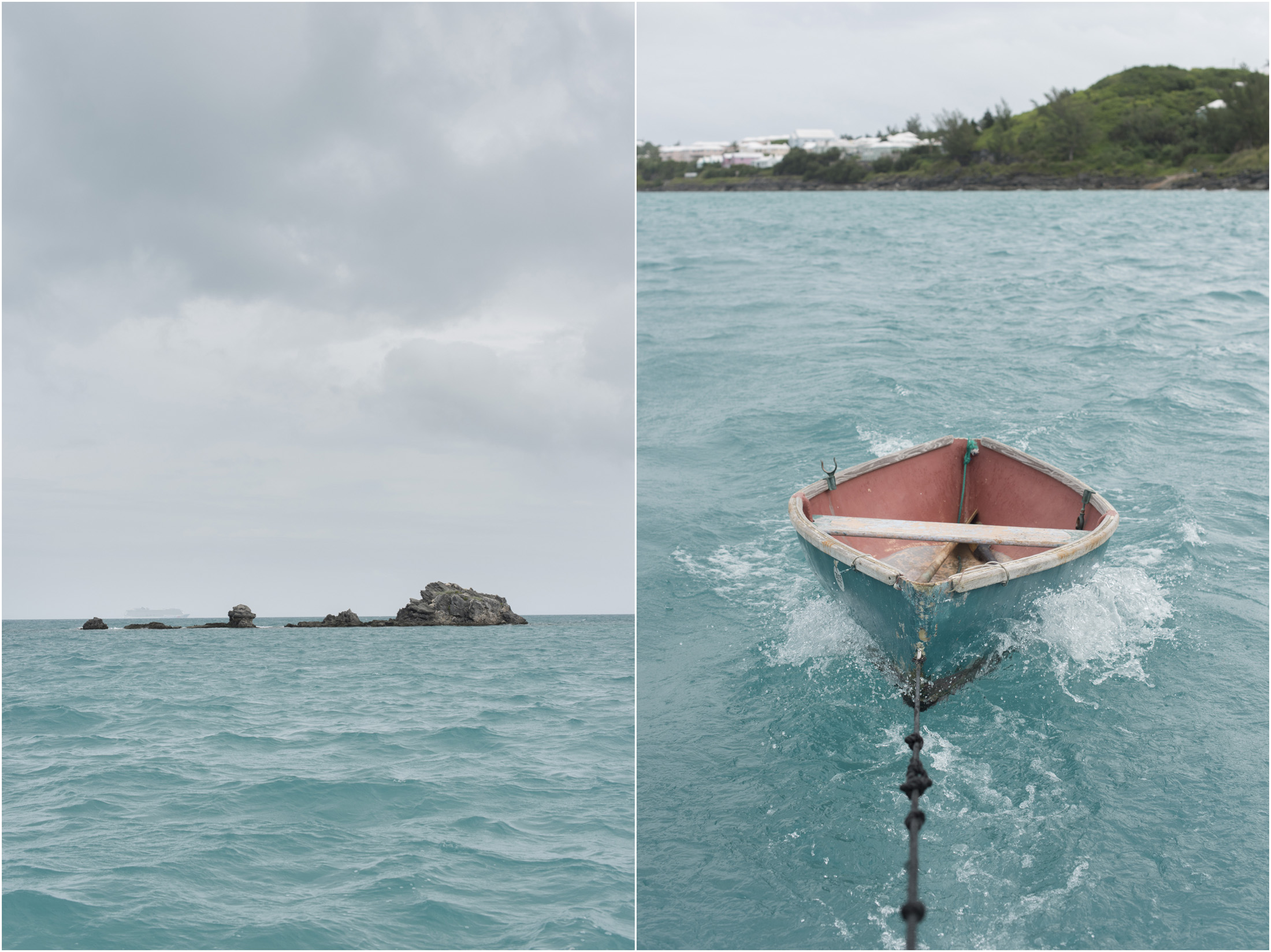
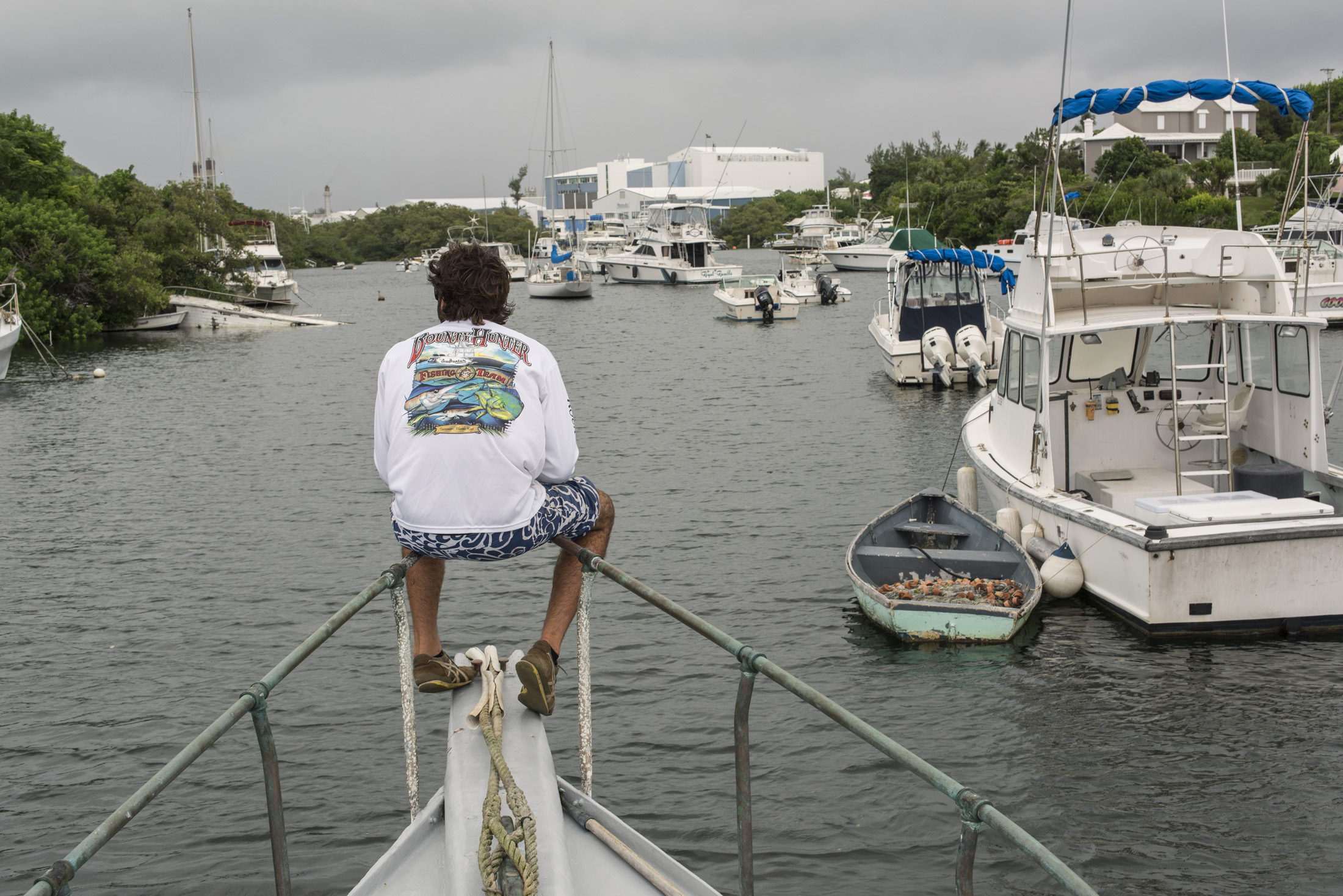
We made our way into Mills Creek and the severity of the wind changed entirely. It was as though we had arrived on another planet; a calm, windless, and an overall safe zone. The area where Jim keeps Troubadour in Mills Creek is called "Dead Mans"; charming, eh? The surrounding area had a few boats that had already met their maker, and I was praying ours did not do the same! Jim secured Troubadour to the storm moorings, and suddenly, it began to pour down with rain! We knew Karl was just around the corner and Jim yelled out with a chuckle, "He's here now!". I, on the other hand, did not laugh. We both jumped into the punt, and slowly Jim slowly rowed us to the boat yard at the mouth of the Creek.
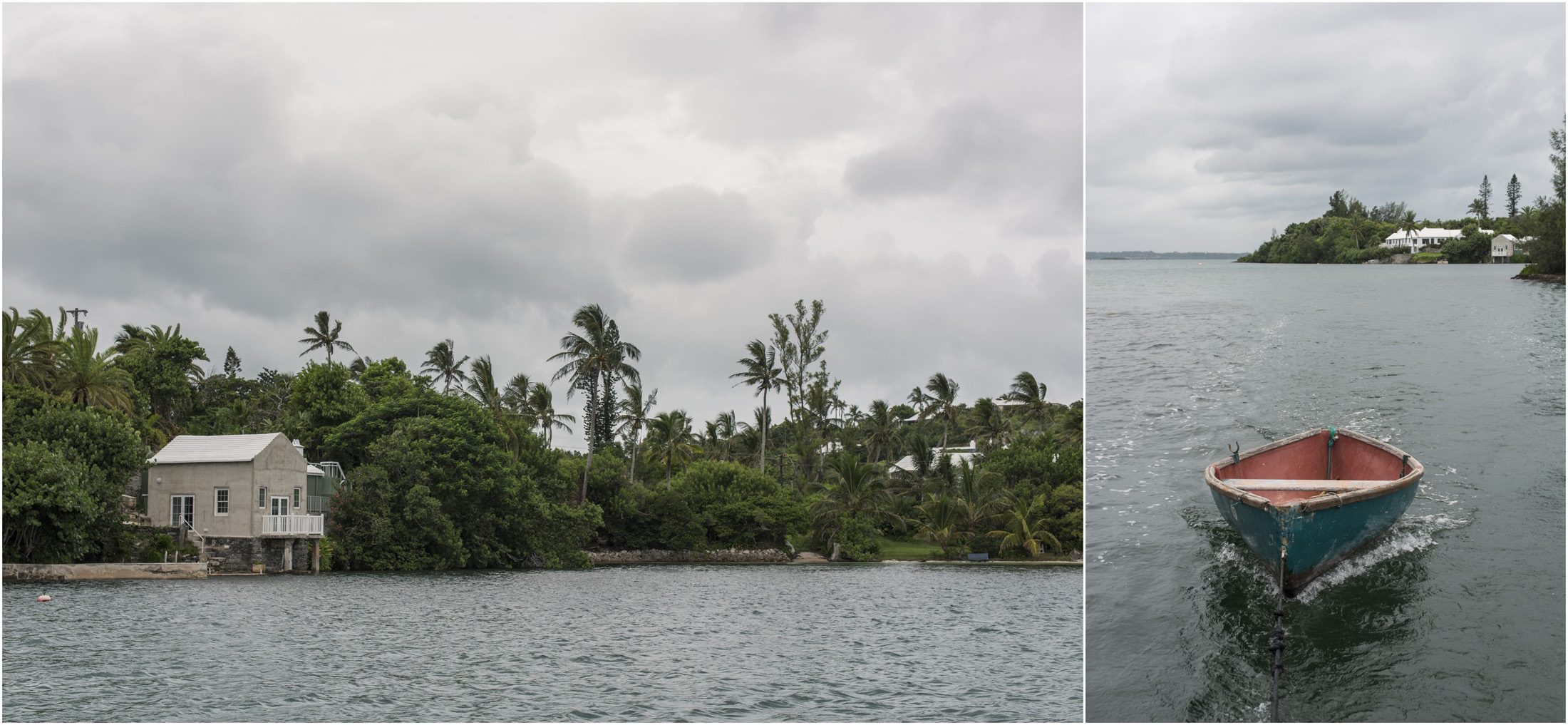
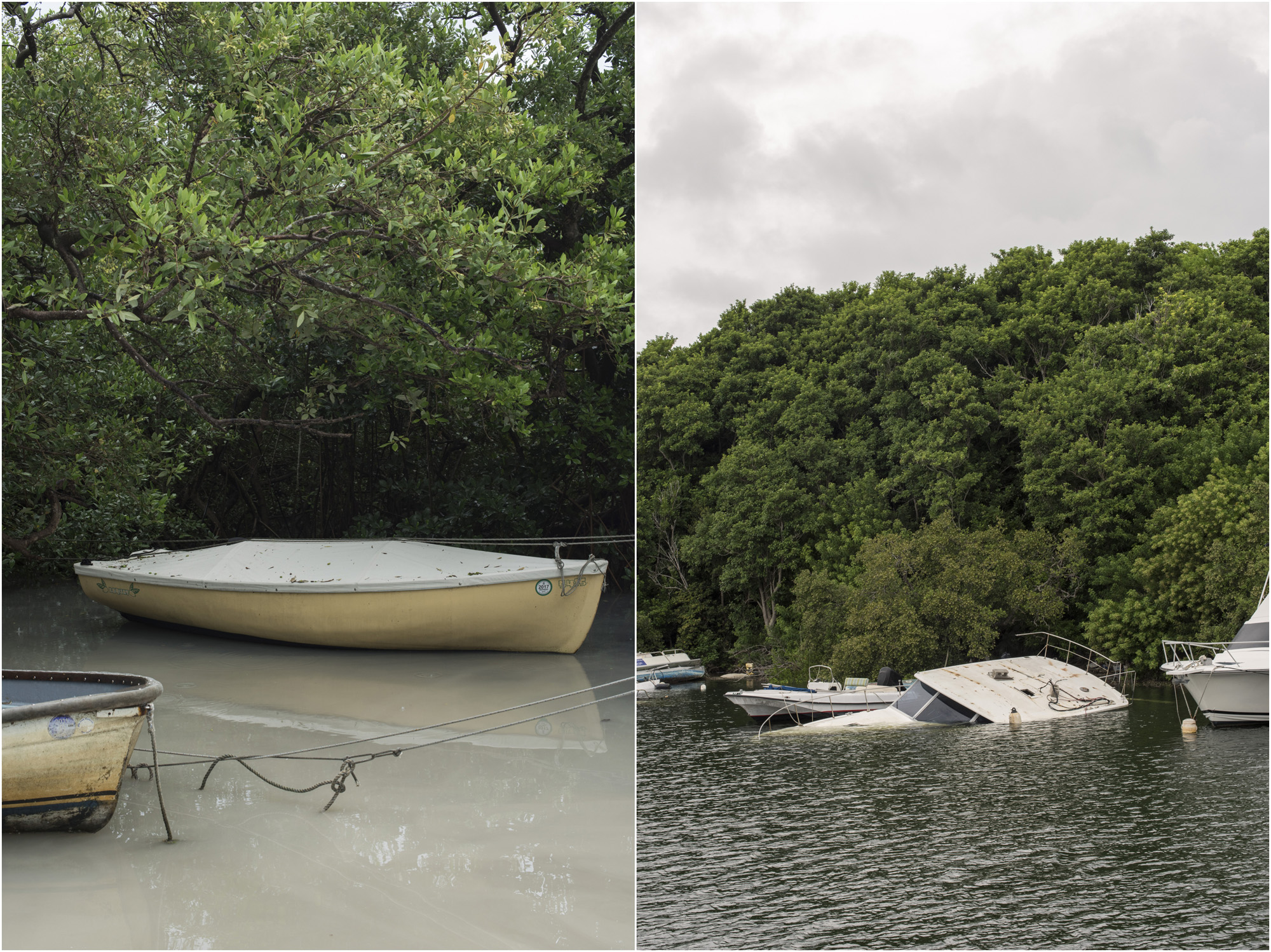
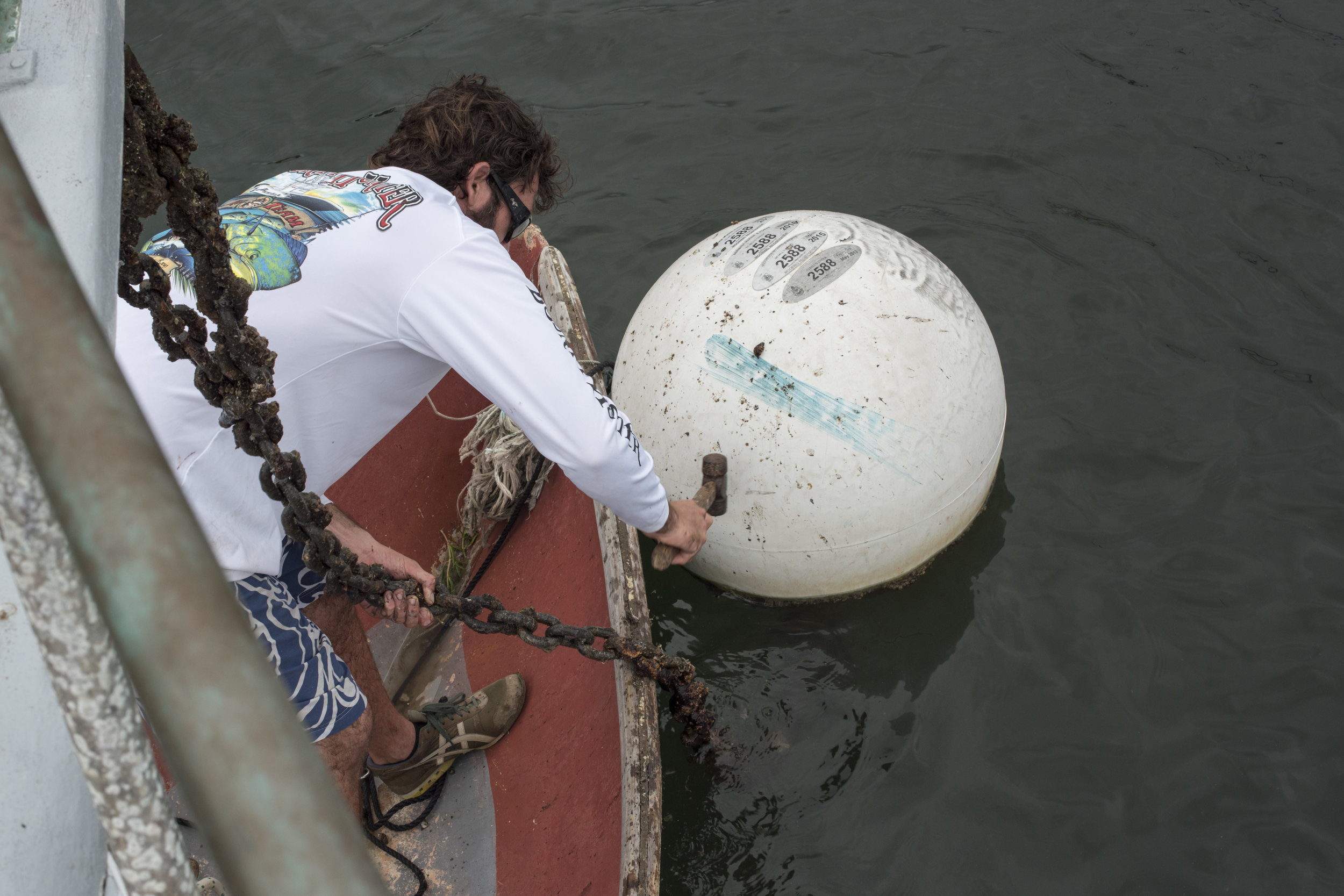
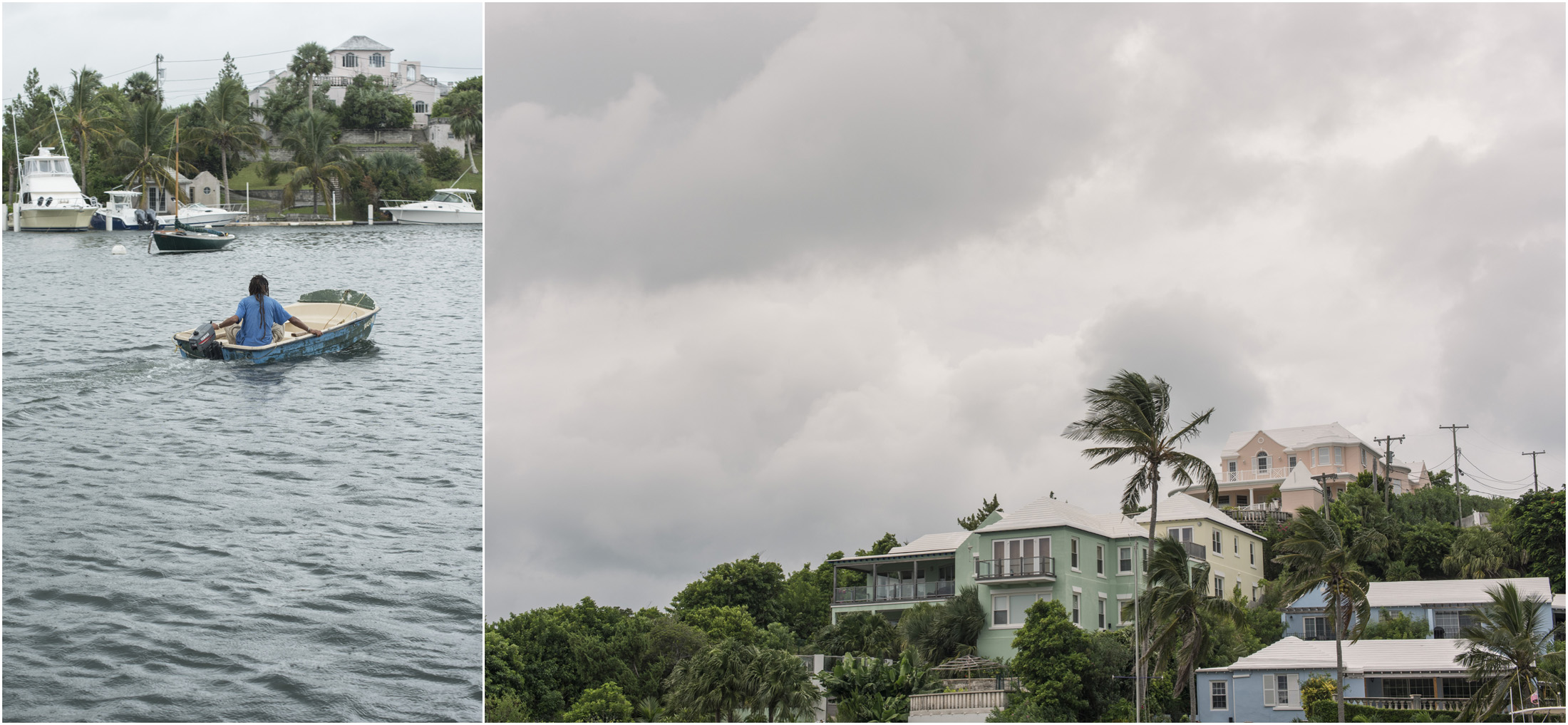
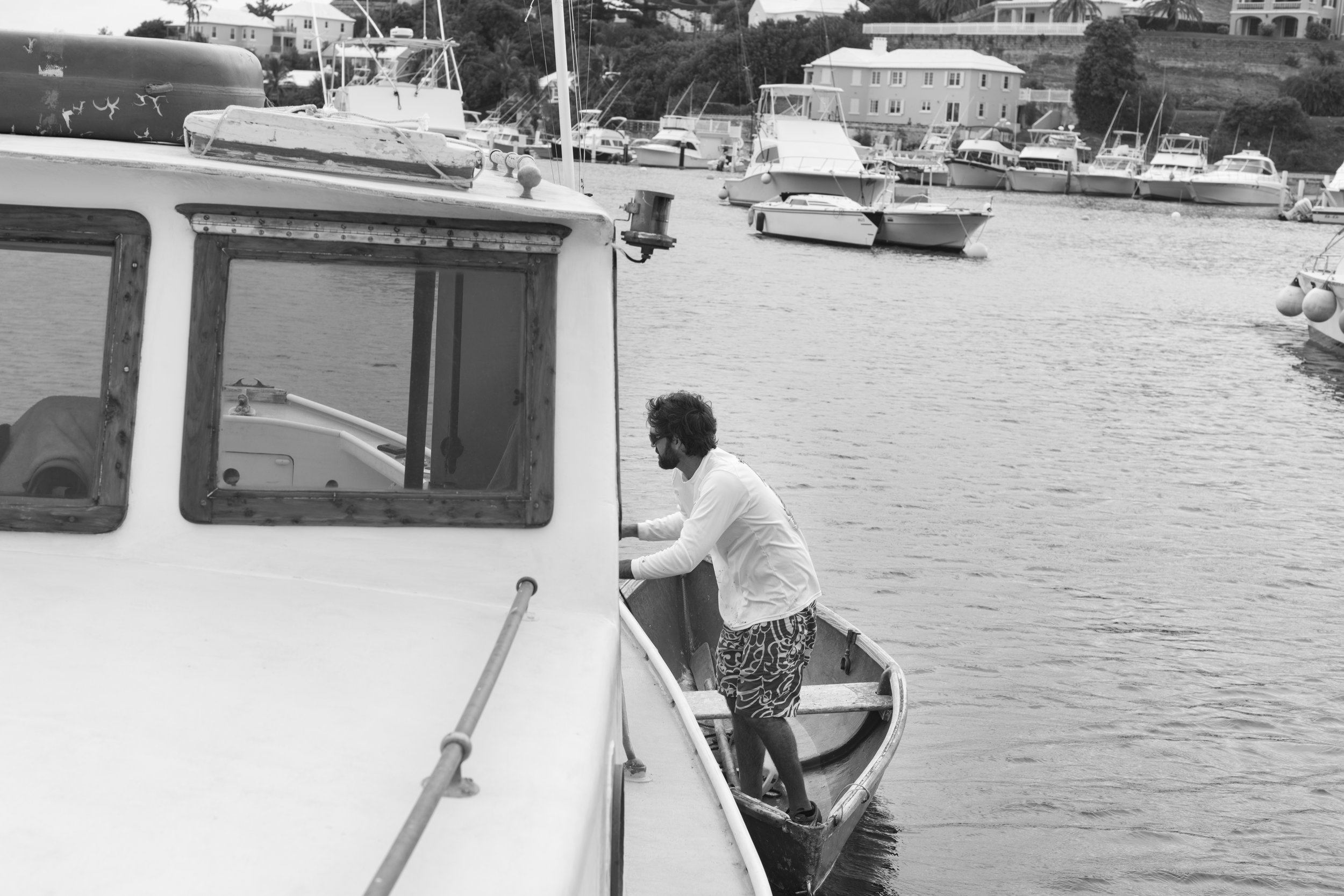
If you've ever been in Mills Creek - particularly in a little punt - then you know the fears of tipping over. There are creatures in those waters! Through the torrential downpour, Jim rowed the boat as I noted: "turn a little to the right; boat up ahead on the port side." After carefully climbing out of the punt - with my Nikon around my neck wrapped tightly in a rain jacket - we left Mills Creek Boat Yard and went back down North Shore to our next destination: West Point.
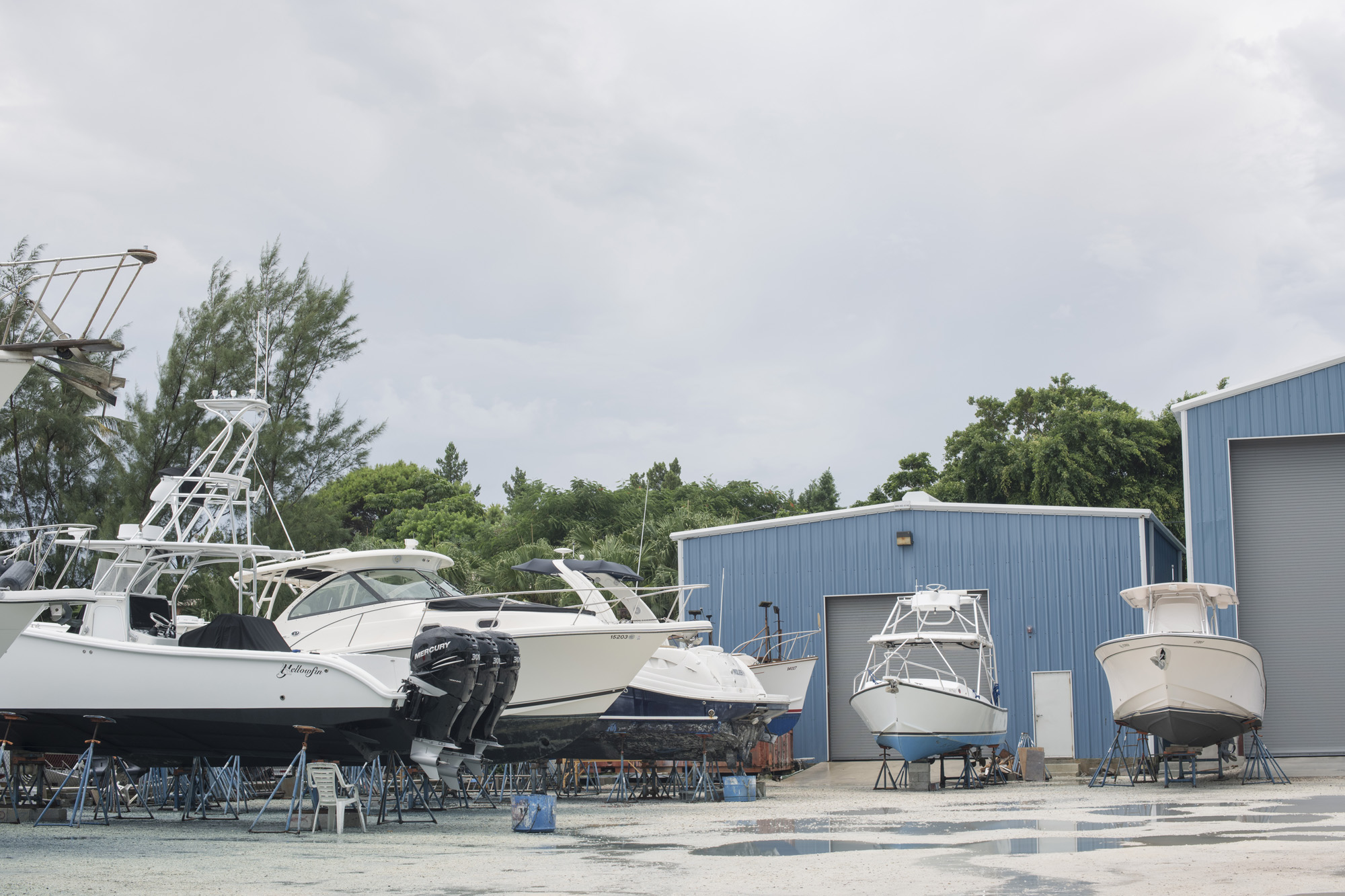
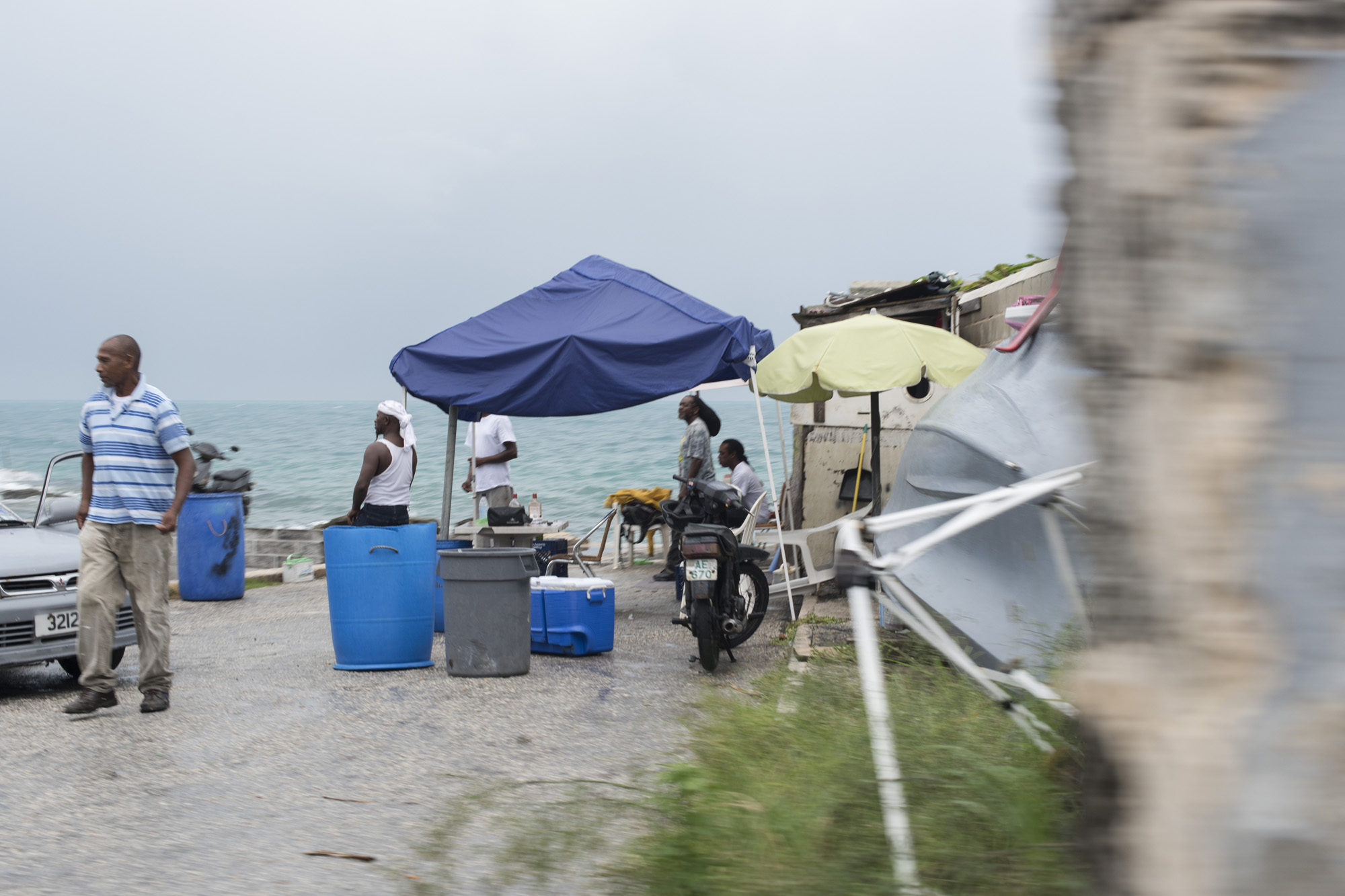
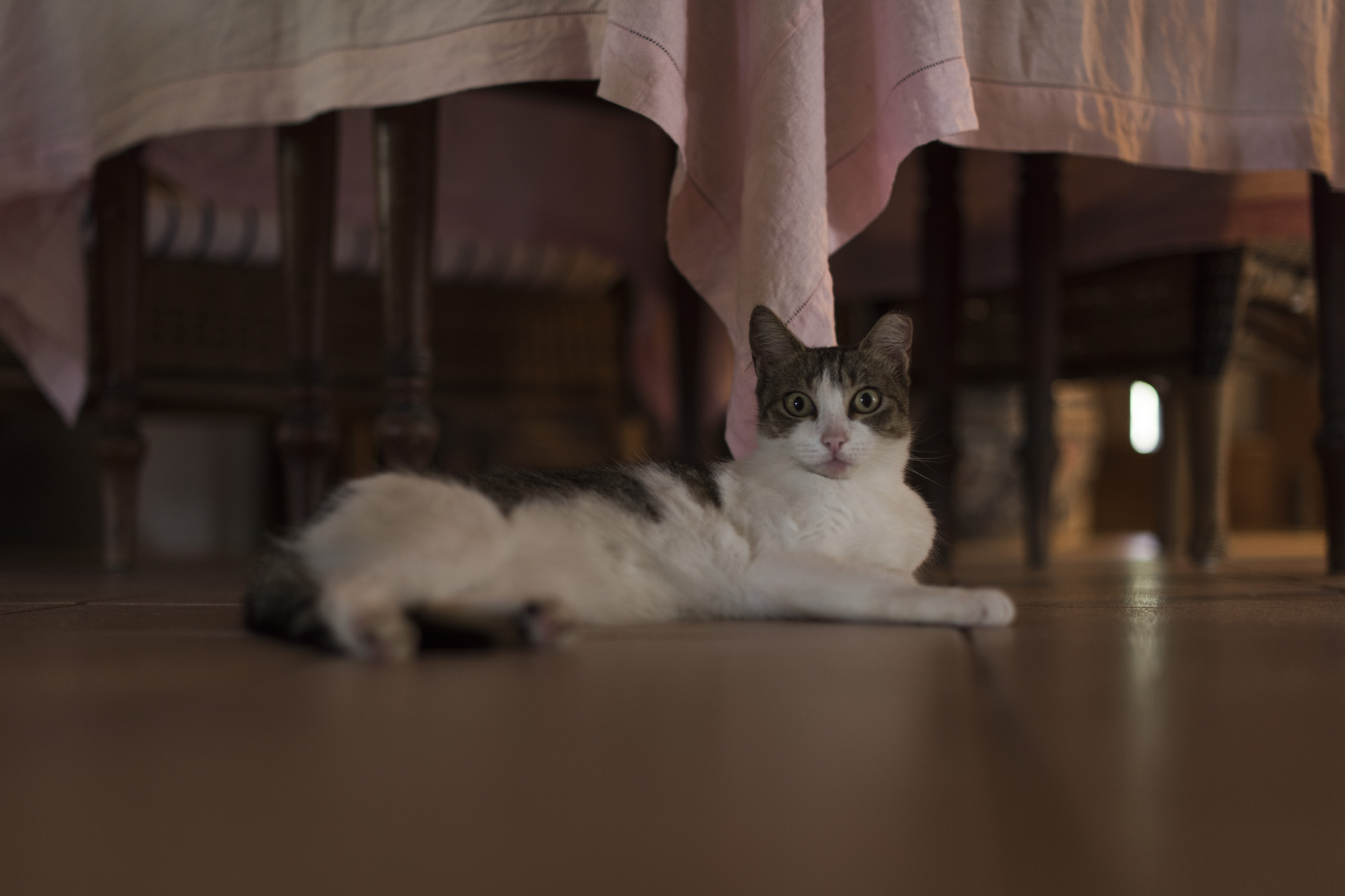
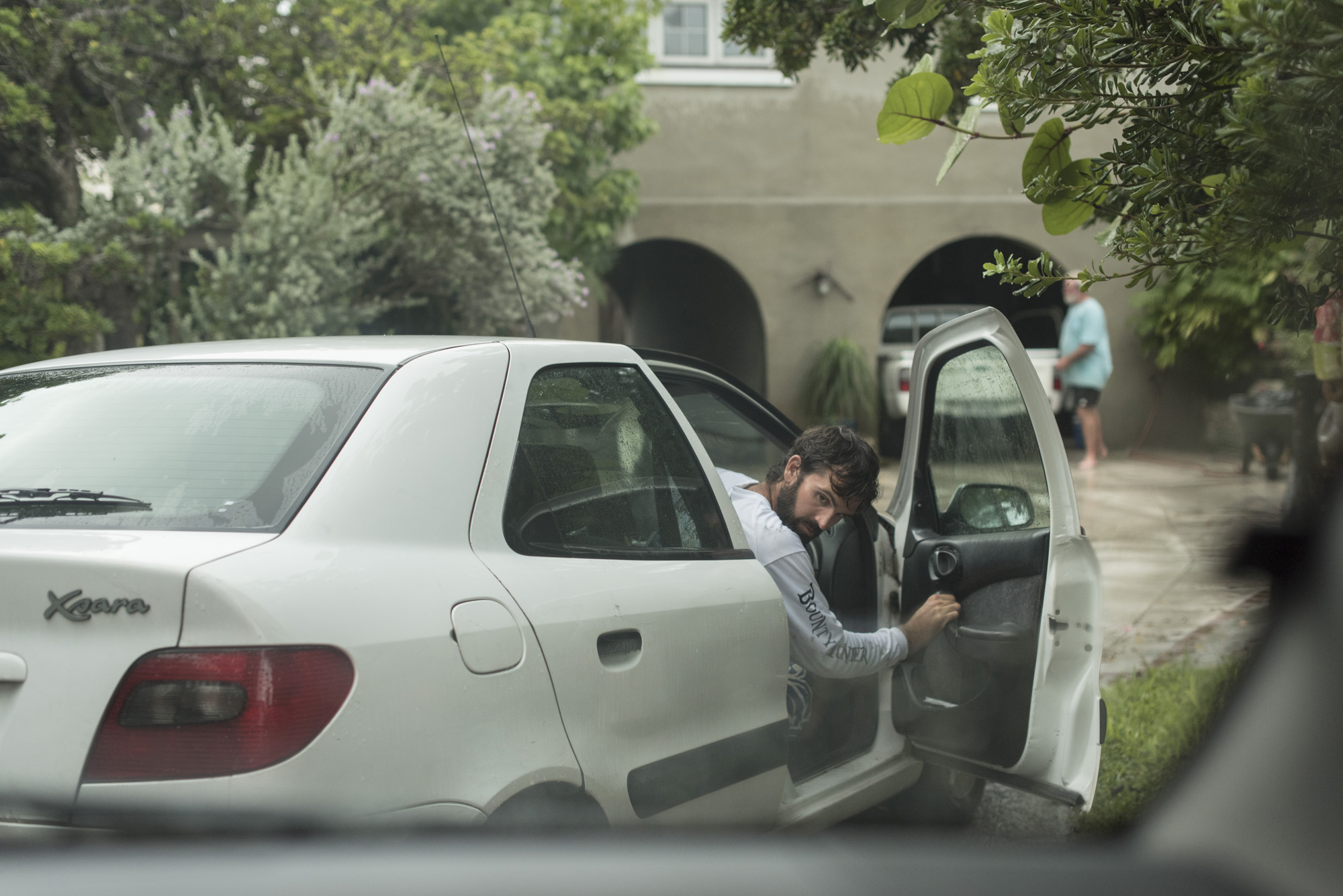
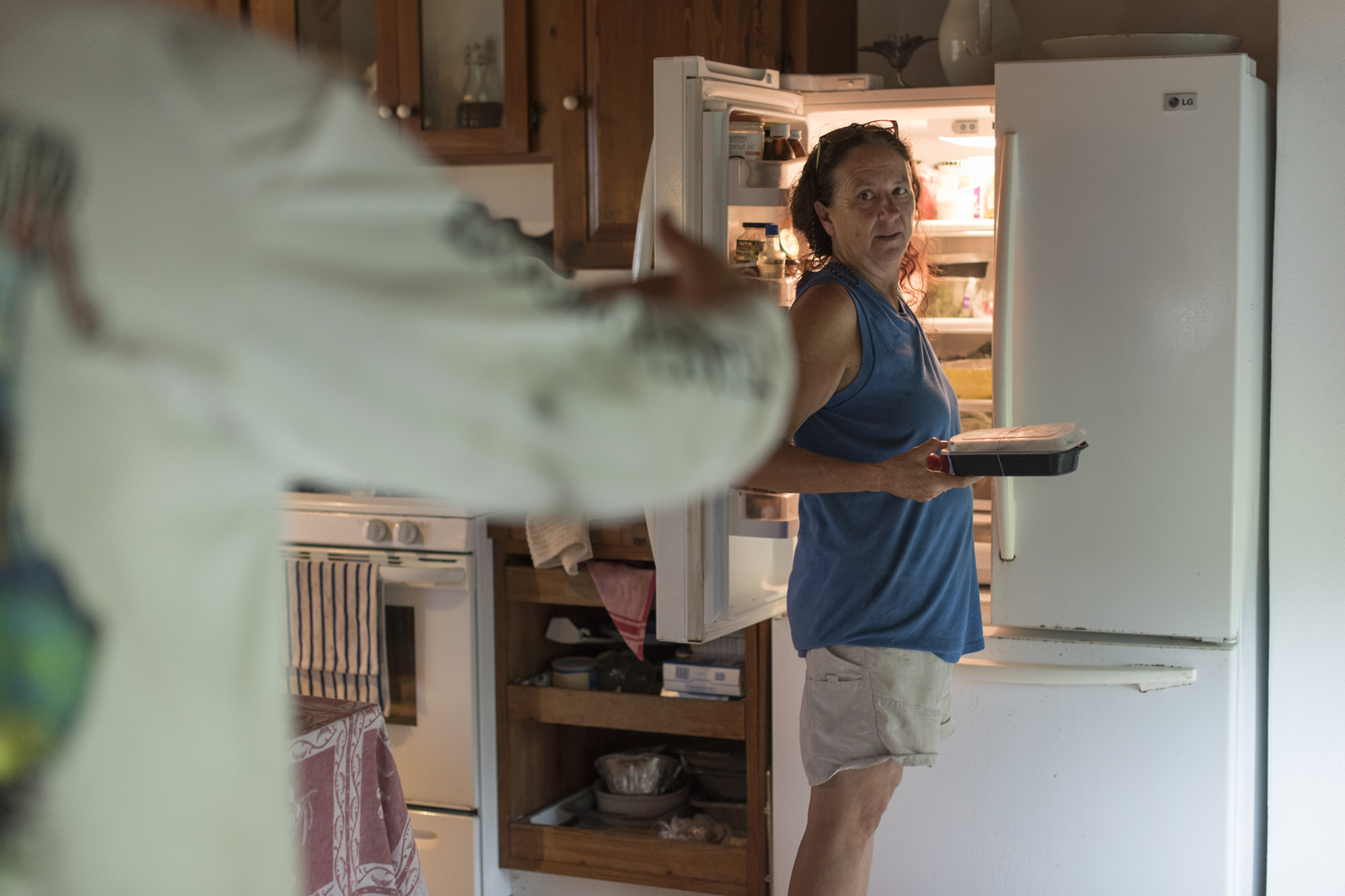
We pulled into the driveway and found Blake, our dear friend Stuart, and his Uncle Mike around the kitchen table - ready and willing to work to help us put up some boards! Bandit, one of the cats at West Point, had made herself a comfortable spot in the kitchen; ears up and alert. After the cars had been put away, we made our way back home to our house up on the hill. We're somewhat exposed to North / Northeast wind and as they say in Bermuda, "We take licks." Before we left, Jenny sent us home with a lovely home cooked meal.
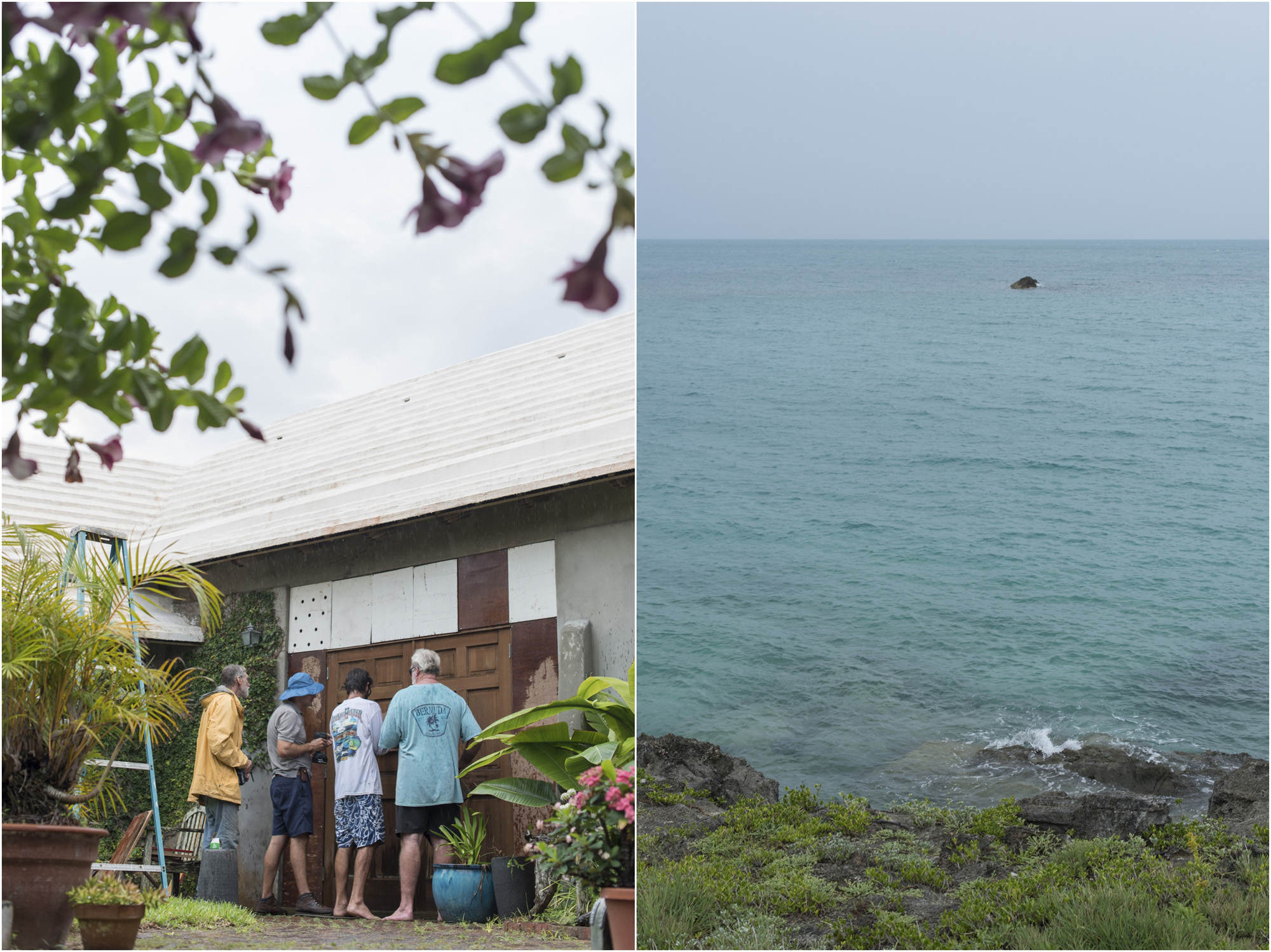
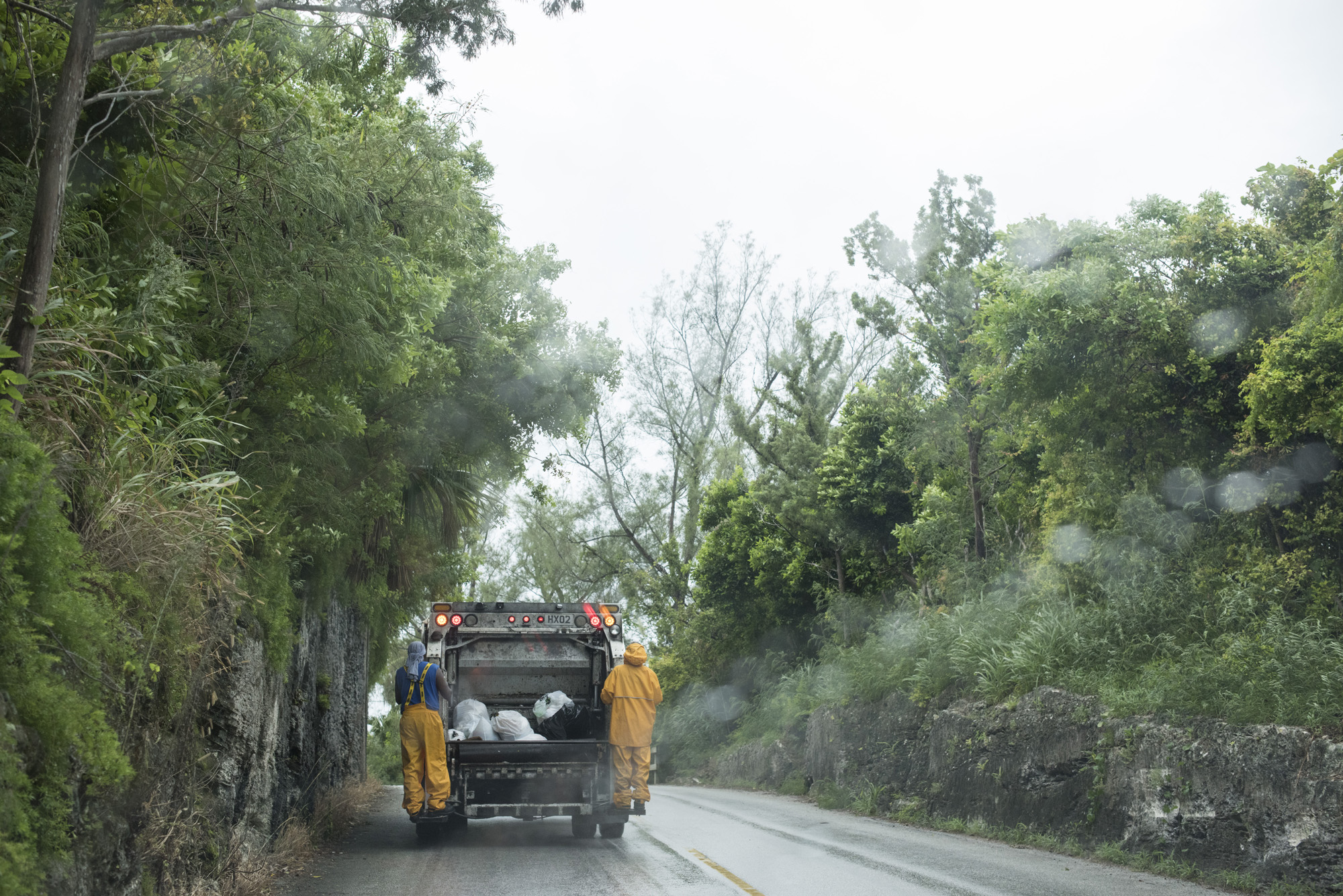
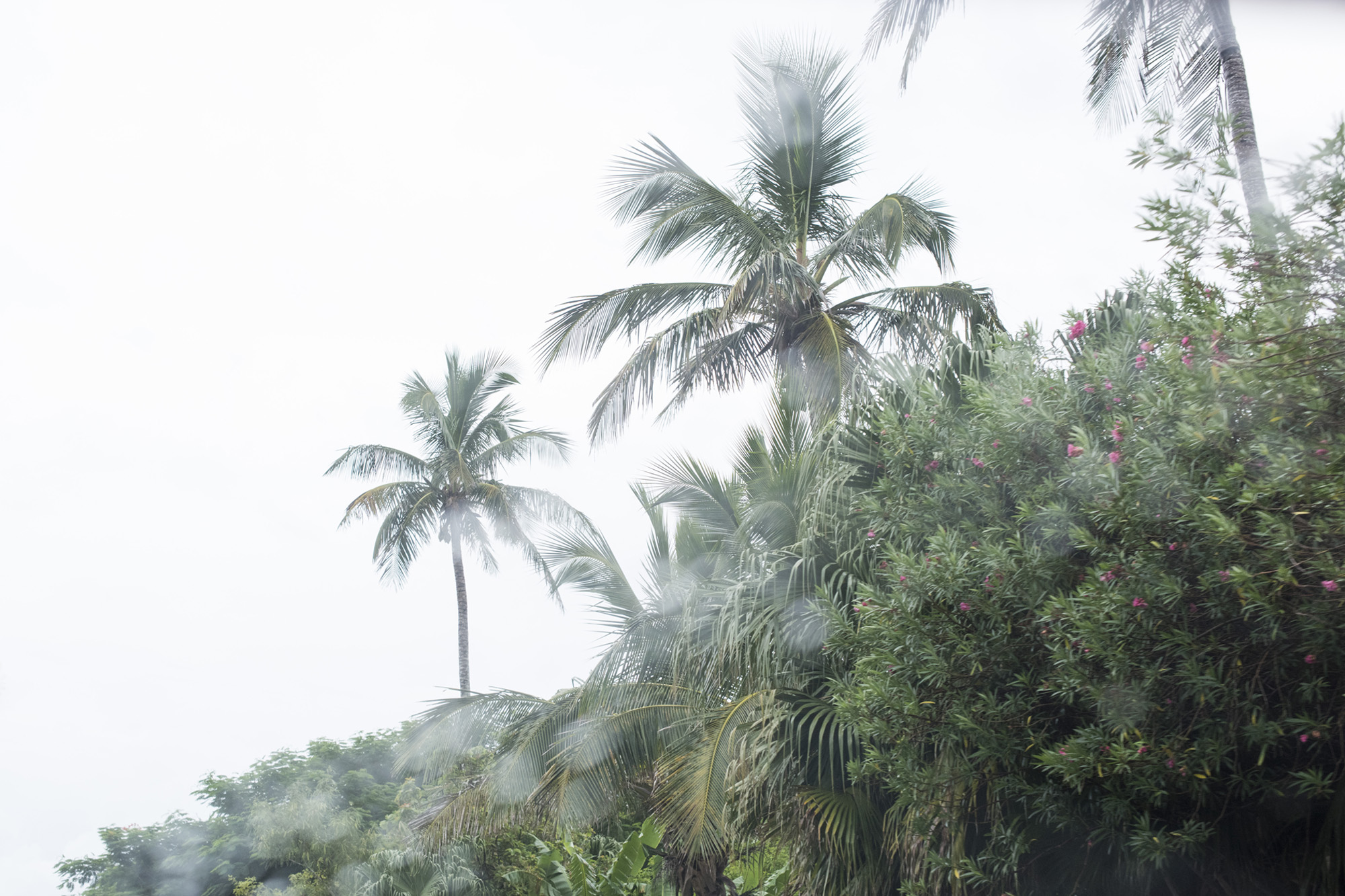
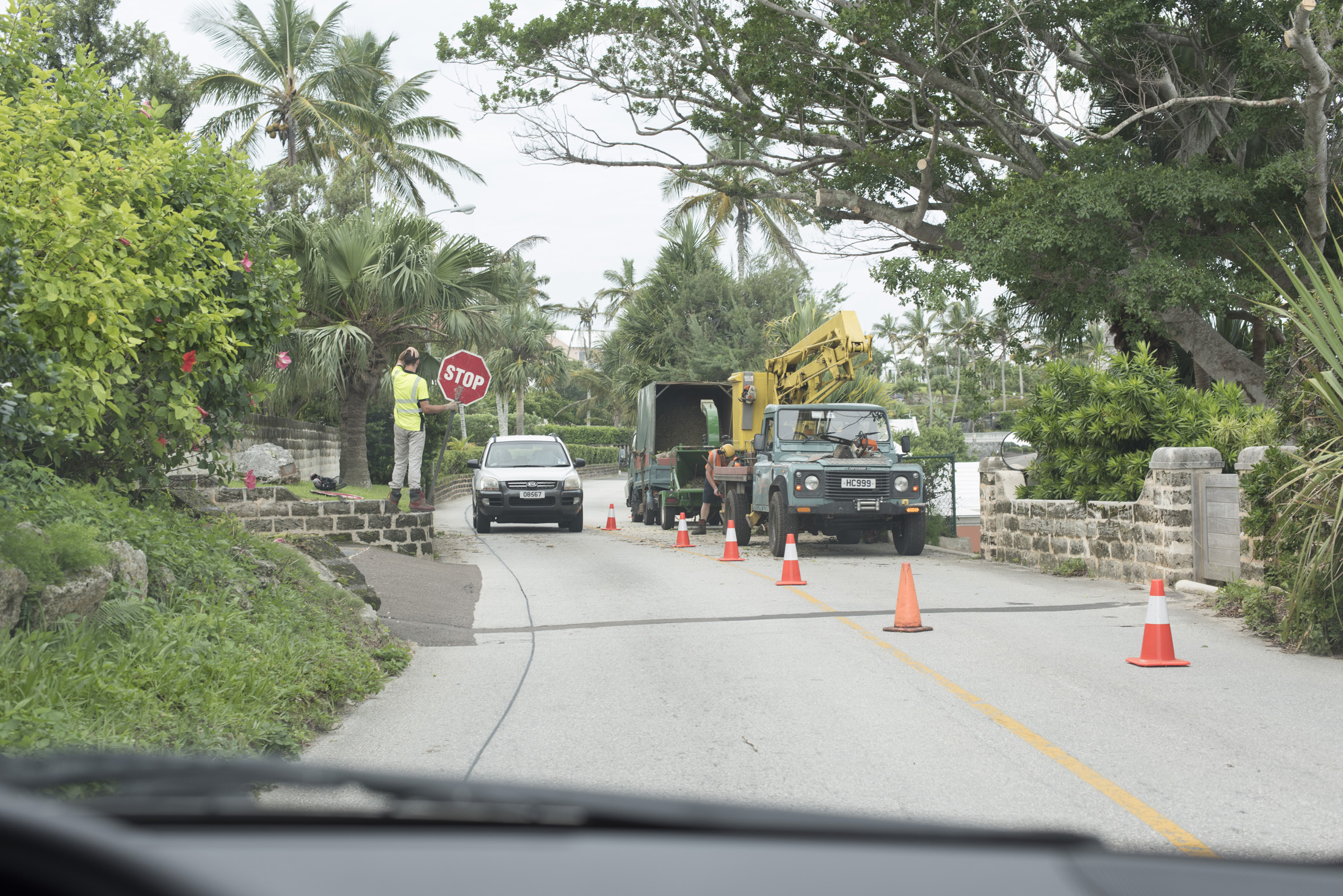
One of the things that stood out to me that day was that Works and Engineering were collecting the trash. It was “trash day”; just another typical day in Bermuda. When you see a little “normalcy” during a storm, it offers a sense of calm. As the day turned to night, house lights started to appear; another sense of normalcy.
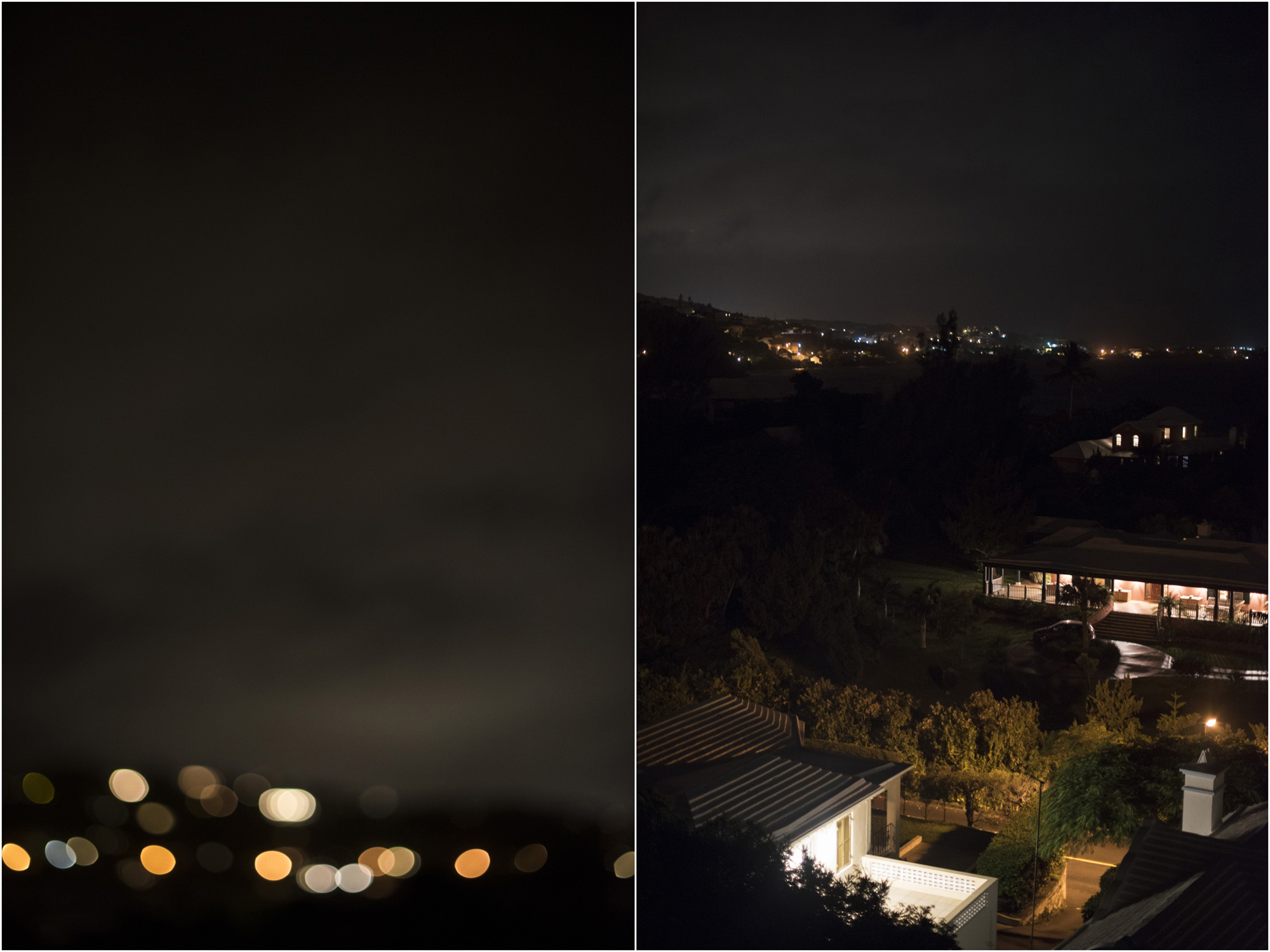
Twilight peeked through one of the windows and in the distance; we could still see the house lights - glowing in the distance. The wind was blowing a bit in the morning, but nothing too drastic. We started our day: Jim made breakfast; I put the cat outside and folded the laundry.
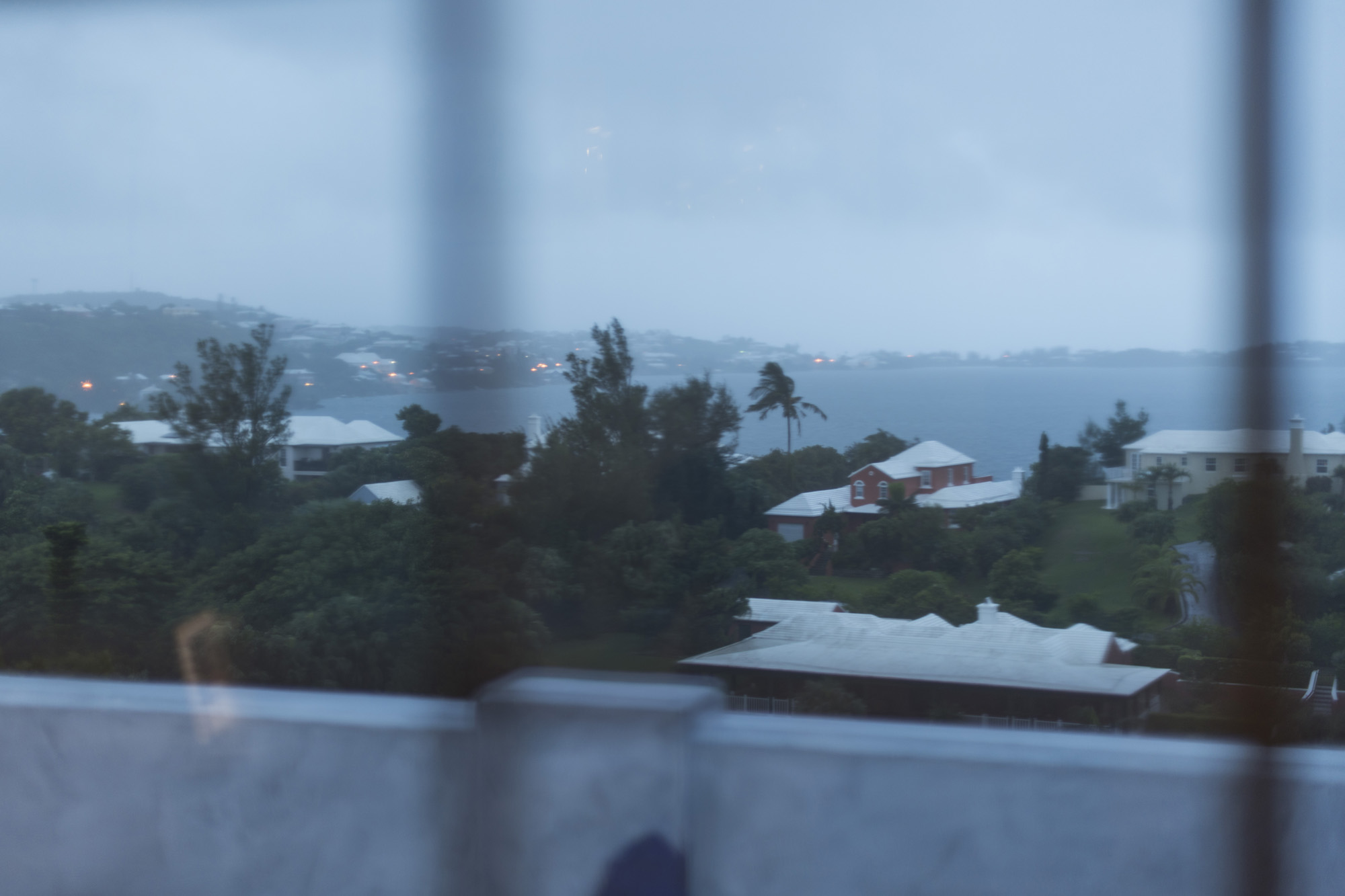
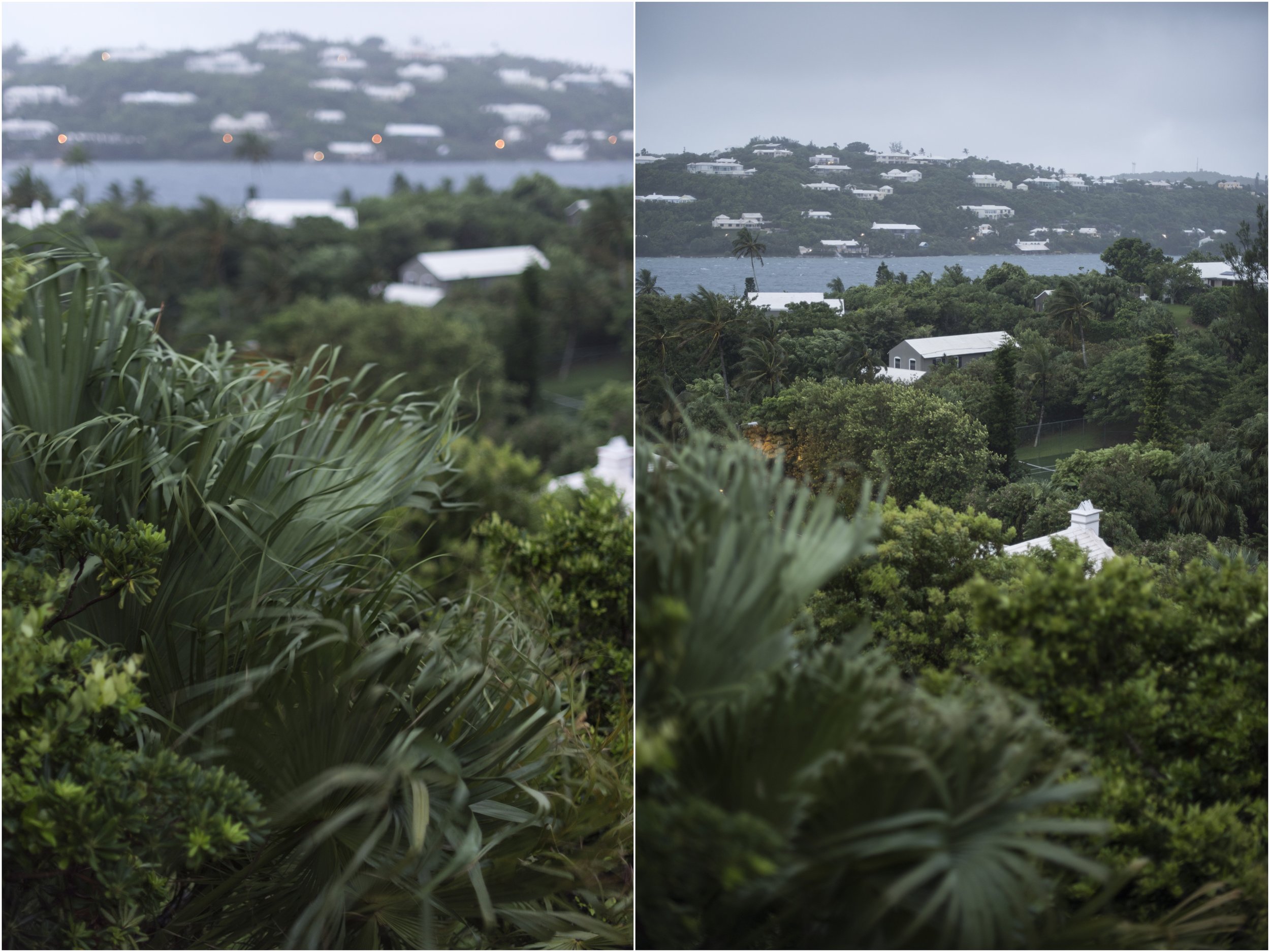
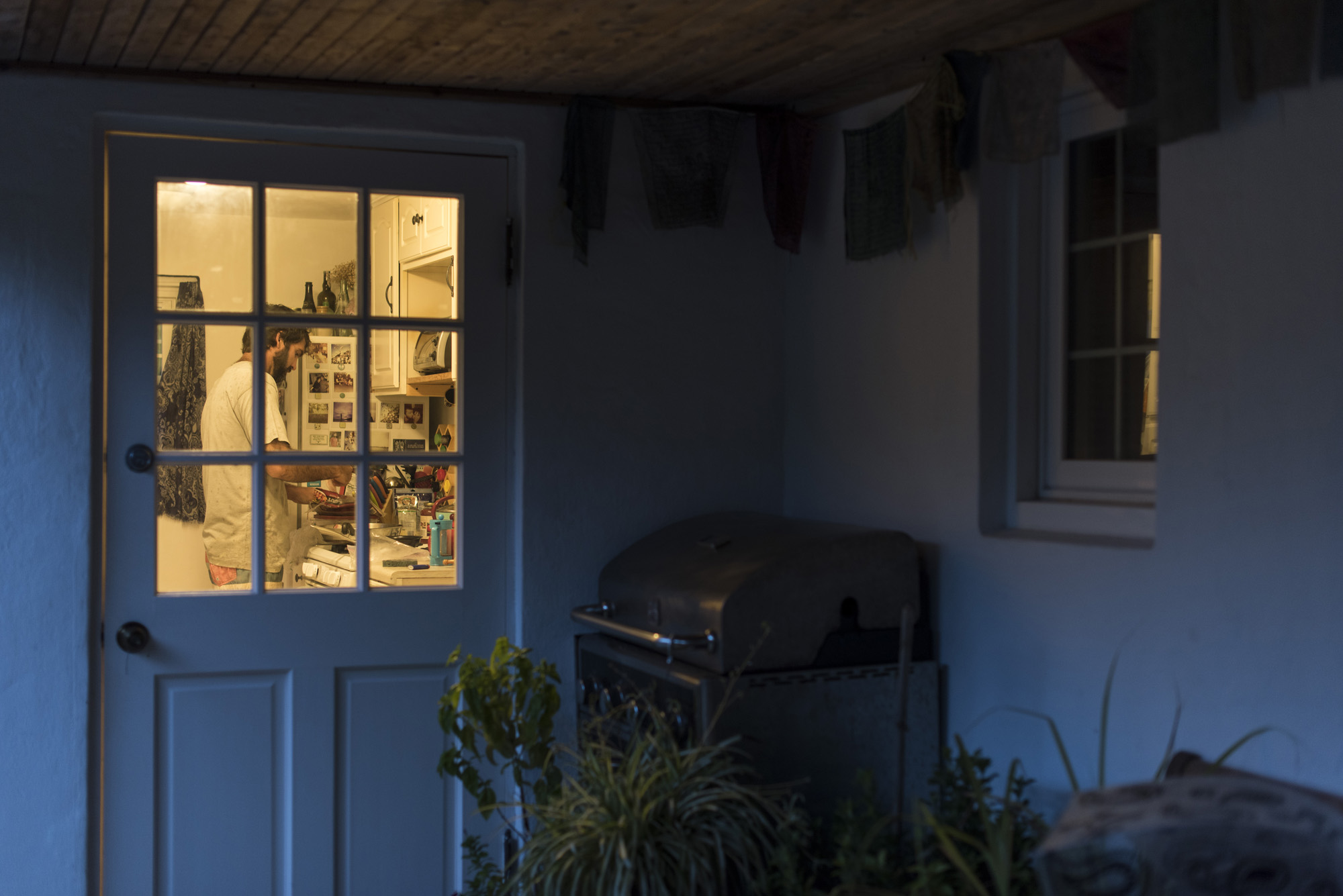
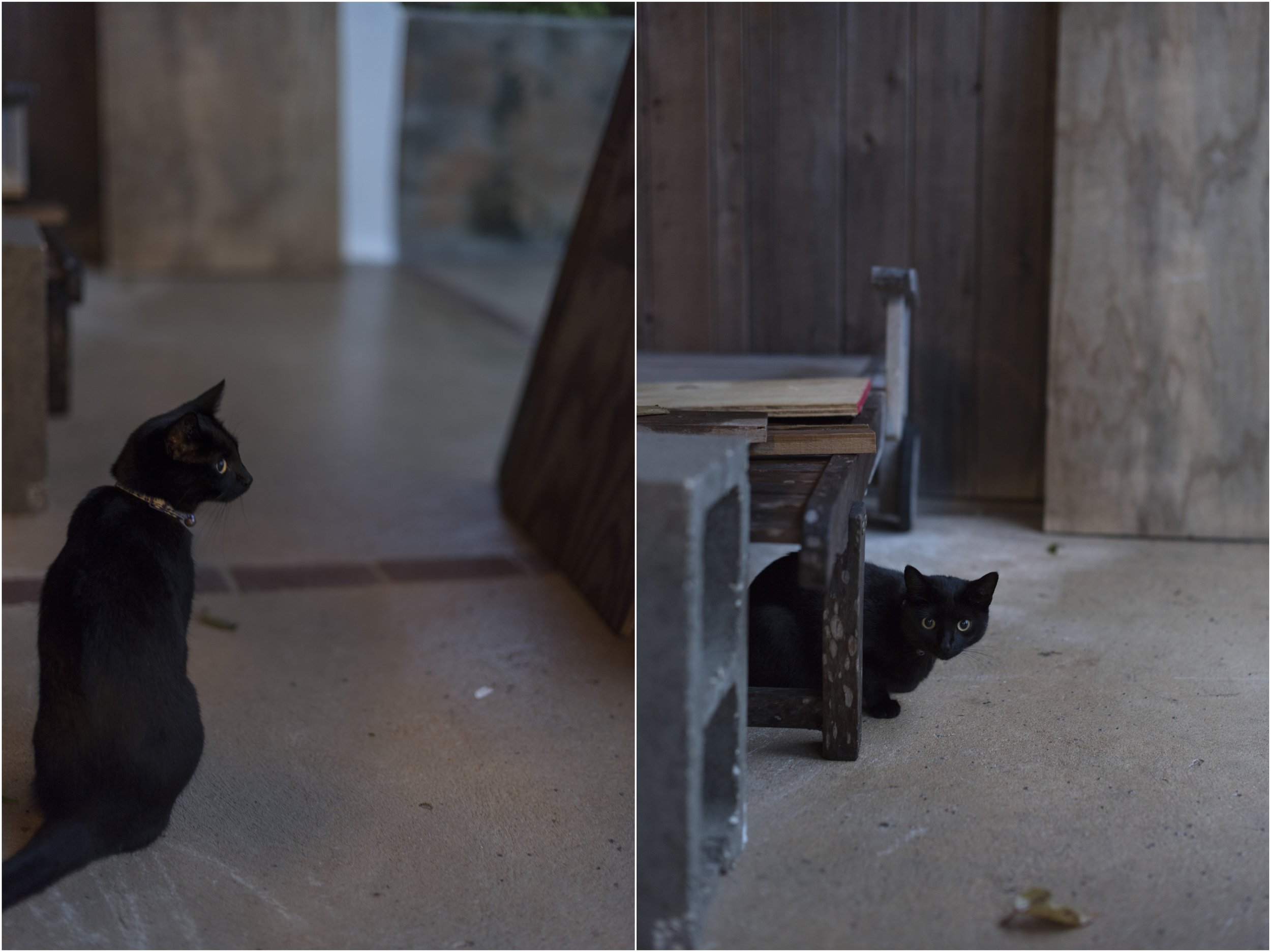

Photo Essay: Hurricane Joaquin - Bermuda
About a week ago, I heard the news that Hurricane Joaquin was sparing the East Coast - I was happy. When I was told that the outer bands of the hurricane were going towards Bermuda - I was nervous. When I learned that the hurricane was a Catagory 4 and heading towards Bermuda - I got on a plane. If you've ever lived on an island, you may be familiar with the "pit" that forms in your stomach as you watch a hurricane unfold.
About a week ago, I heard the news that Hurricane Joaquin was sparing the East Coast - I was happy. When I was told that the outer bands of the hurricane were going towards Bermuda - I was nervous. When I learned that the hurricane was a Catagory 4 and heading towards Bermuda - I got on a plane. If you've ever lived on an island, you may be familiar with the "pit" that forms in your stomach as you watch a hurricane unfold.
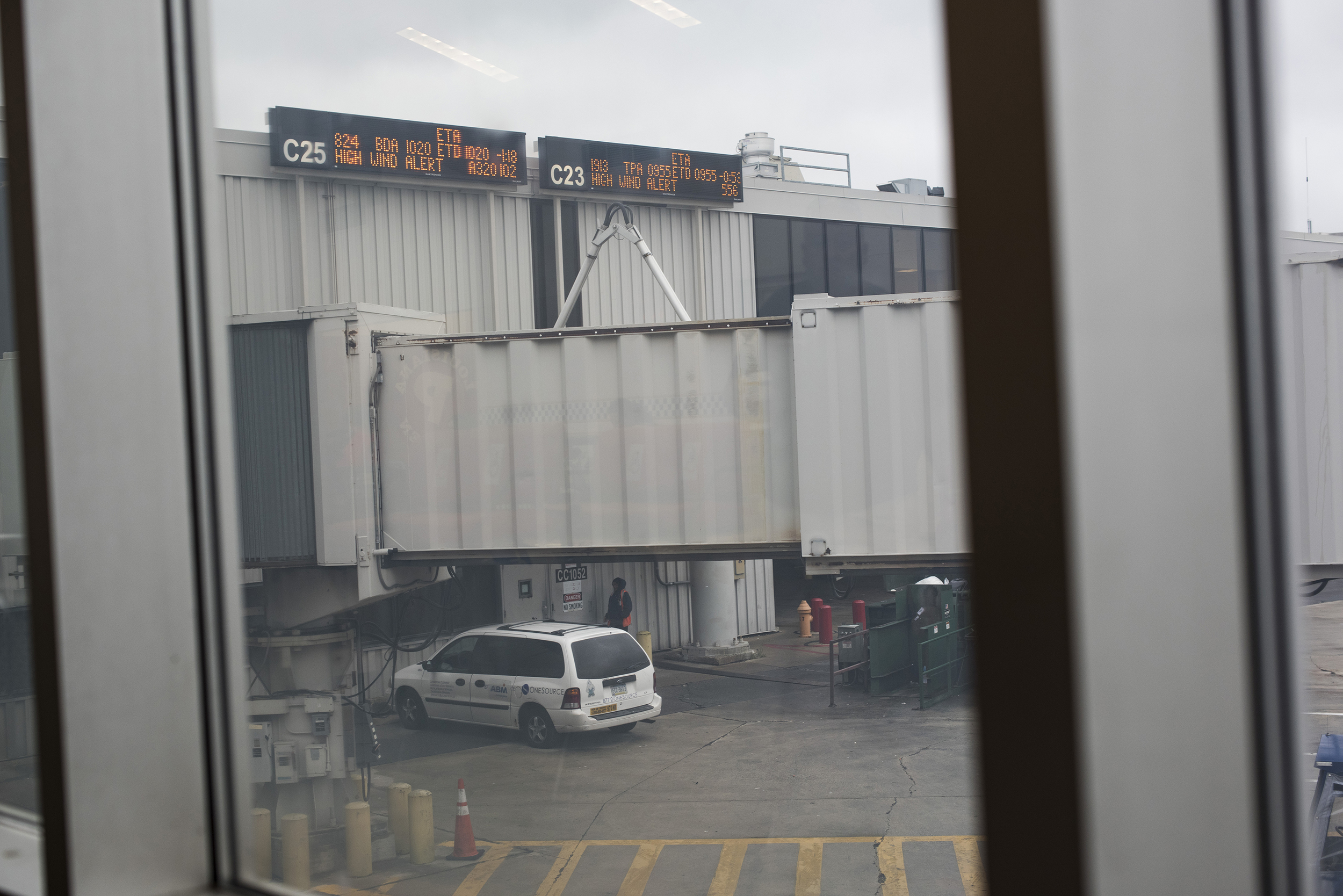
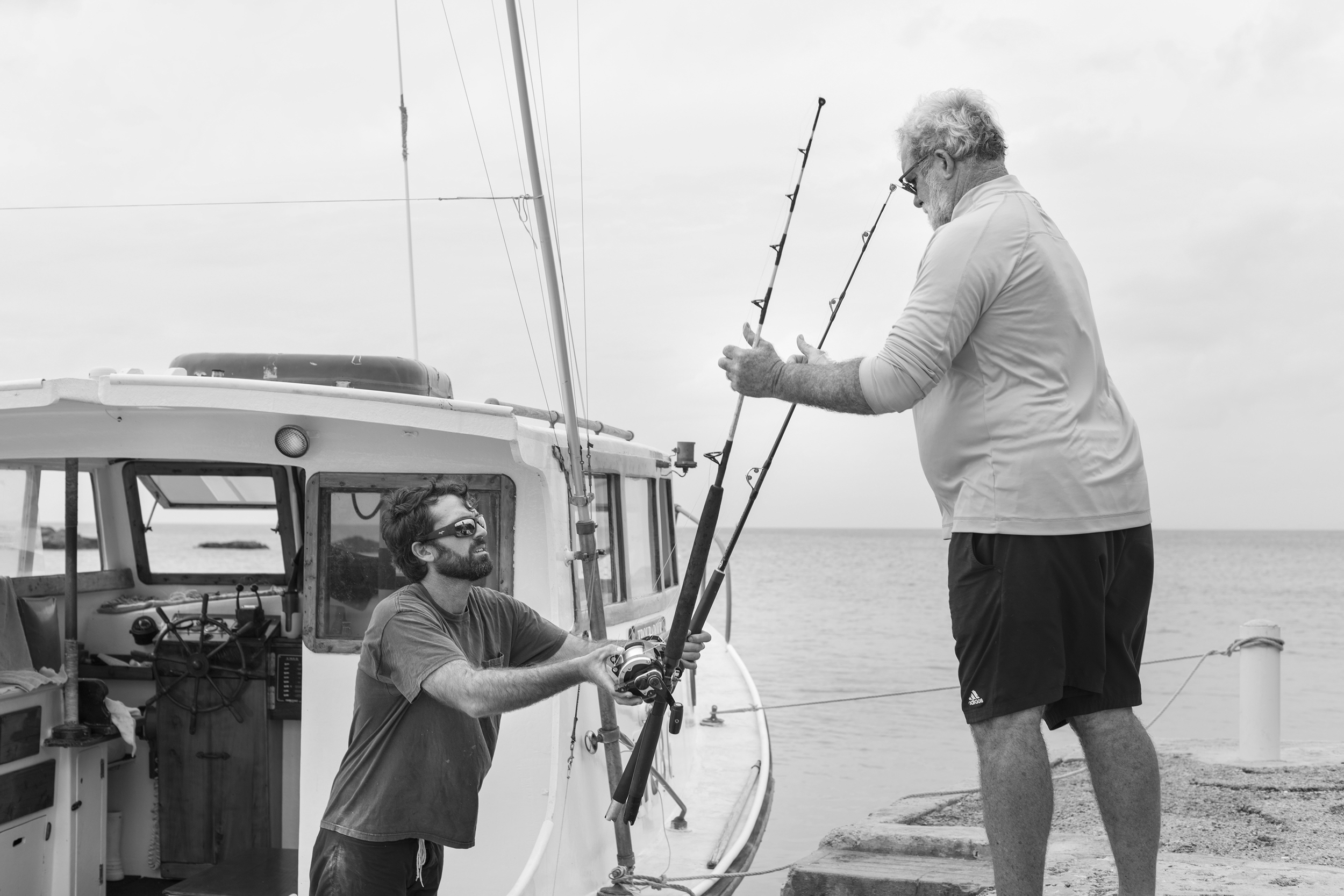
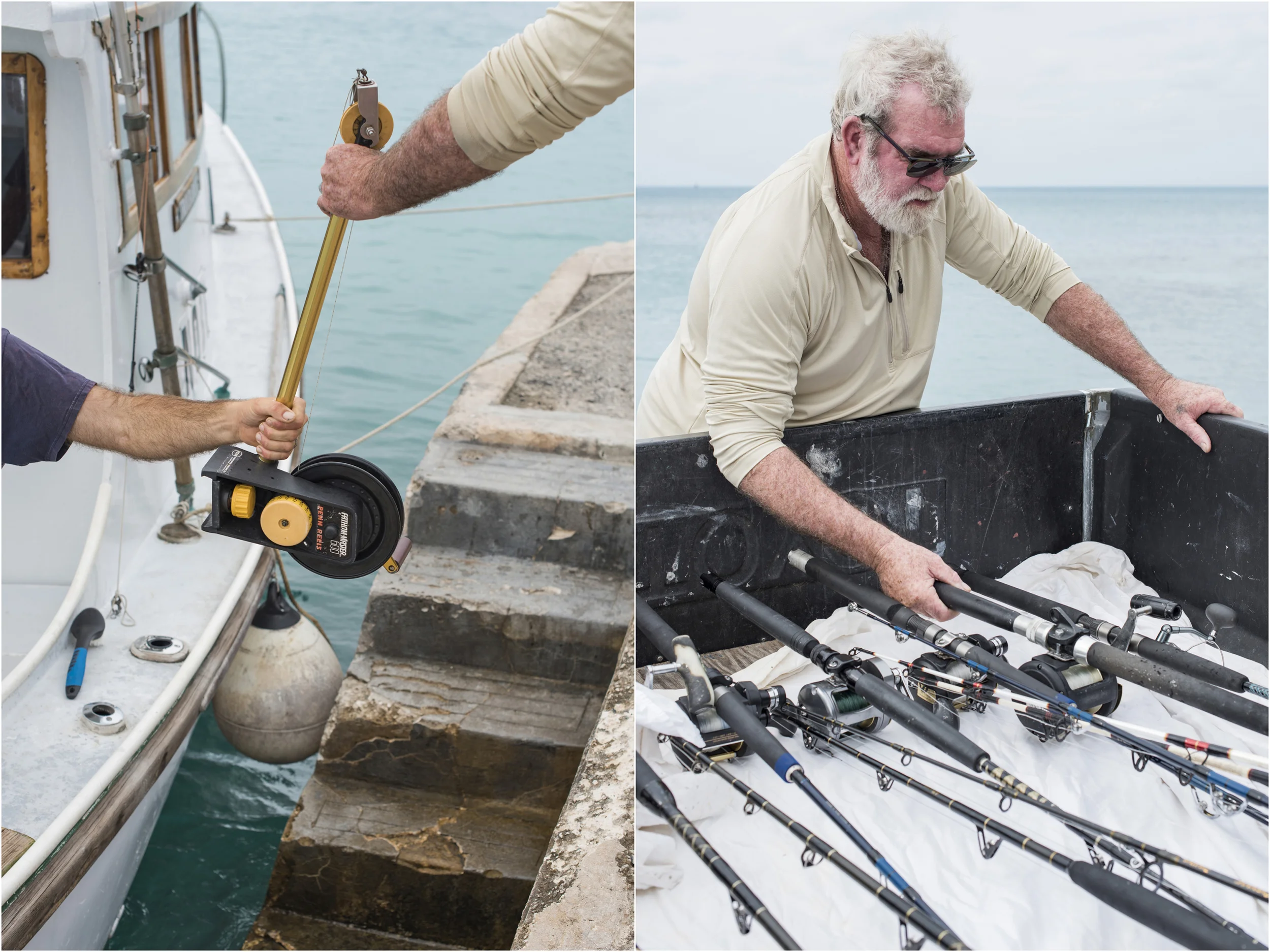
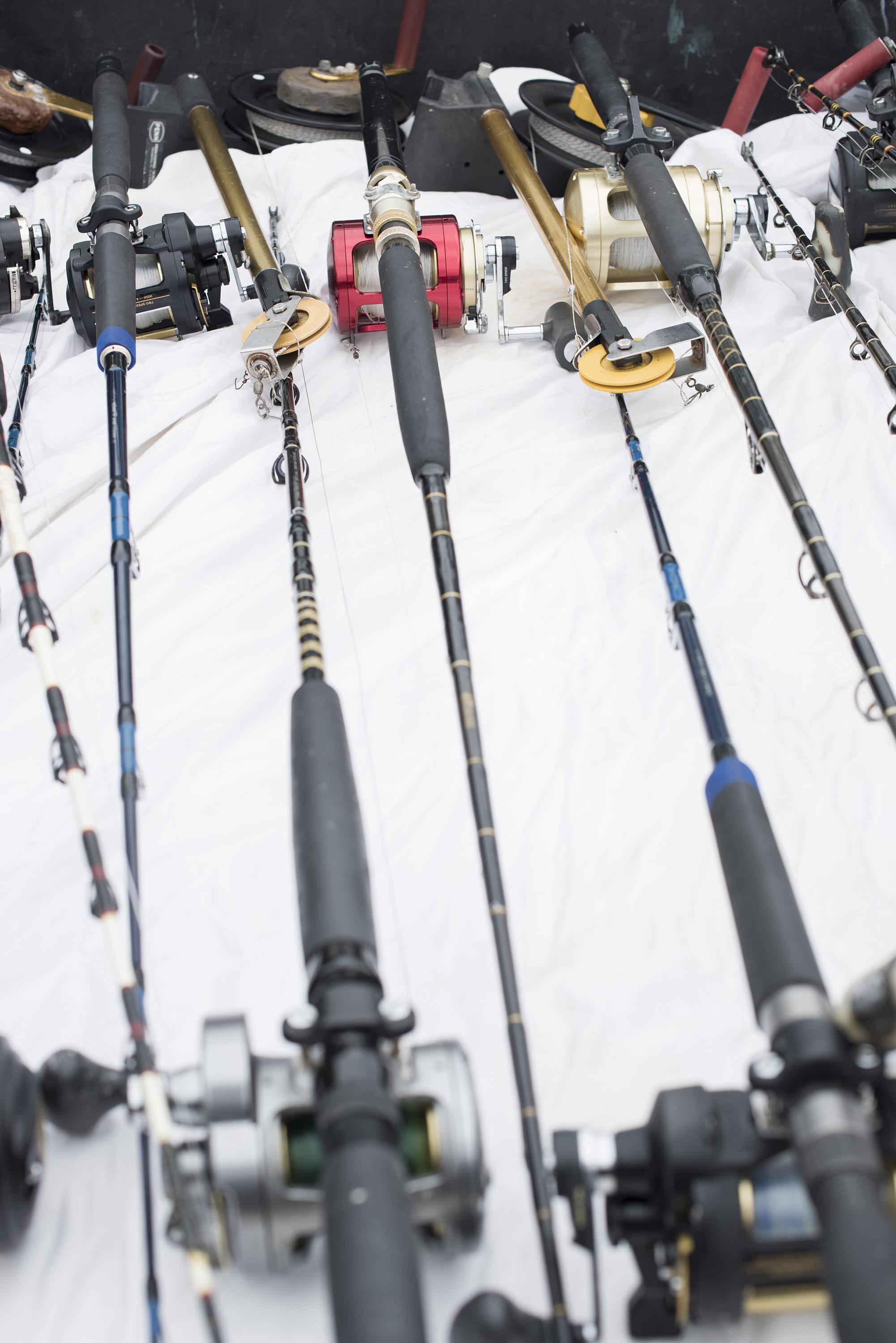
I left Washington D.C. the day before Joaquin was scheduled to hit Bermuda. As I waited at the gate, I noticed the message flashing above the door for the pilots: "High Wind Alert". That did not make the pit feeling go away. Once I arrived back in Bermuda - a smooth flight I might add; thank you U.S. Airways - it was time to get to work! First things first: pull the fishing gear off the family boat, named Troubadour, and move her to our hurricane mooring, which is six miles away. The wind was already starting to pick up at this time, and a rain squall could be seen far off in the distance. My husband, Jim, and father-in-law, Blake, both took Troubadour up to the mooring and got caught in the downpour.
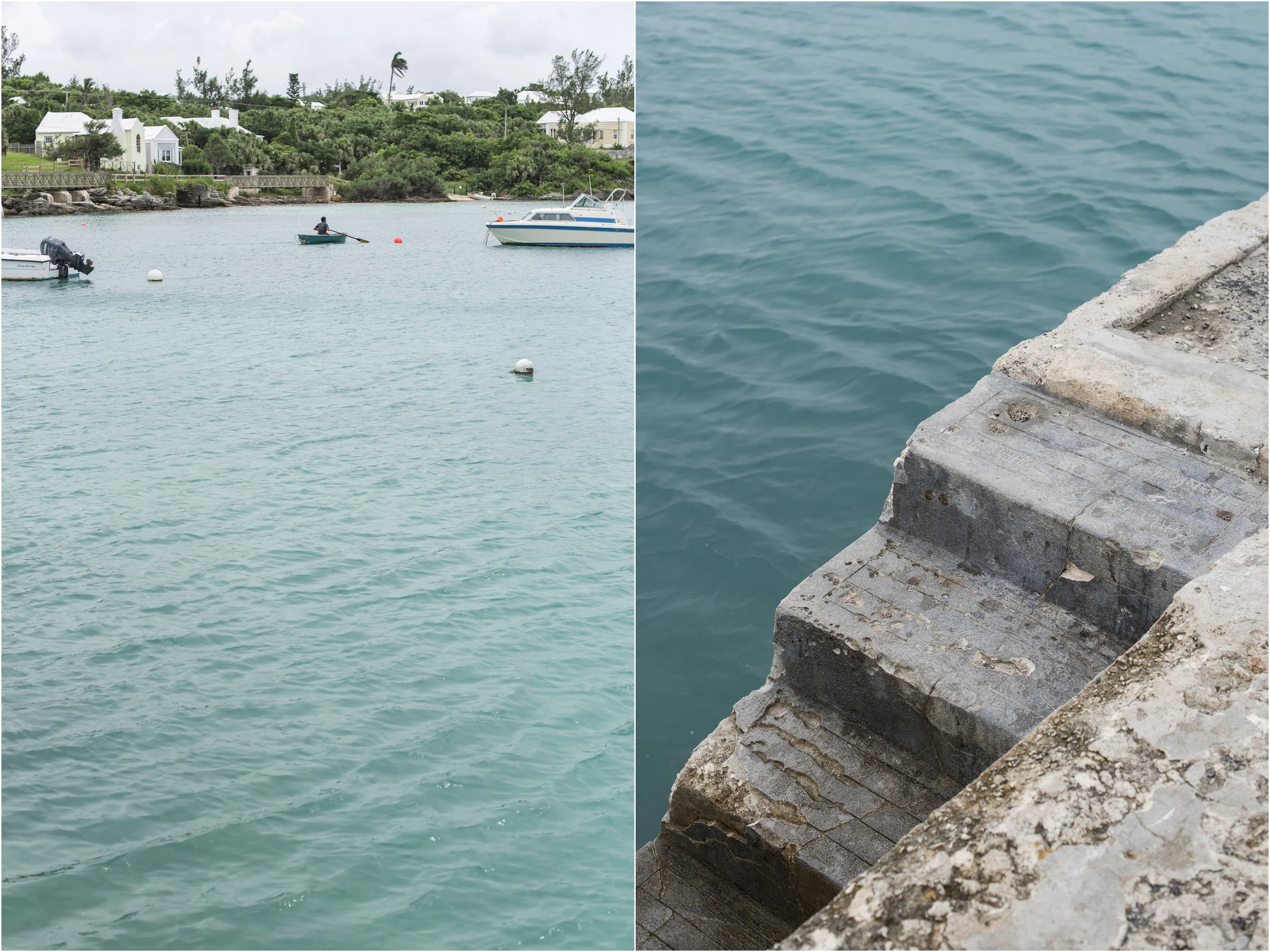
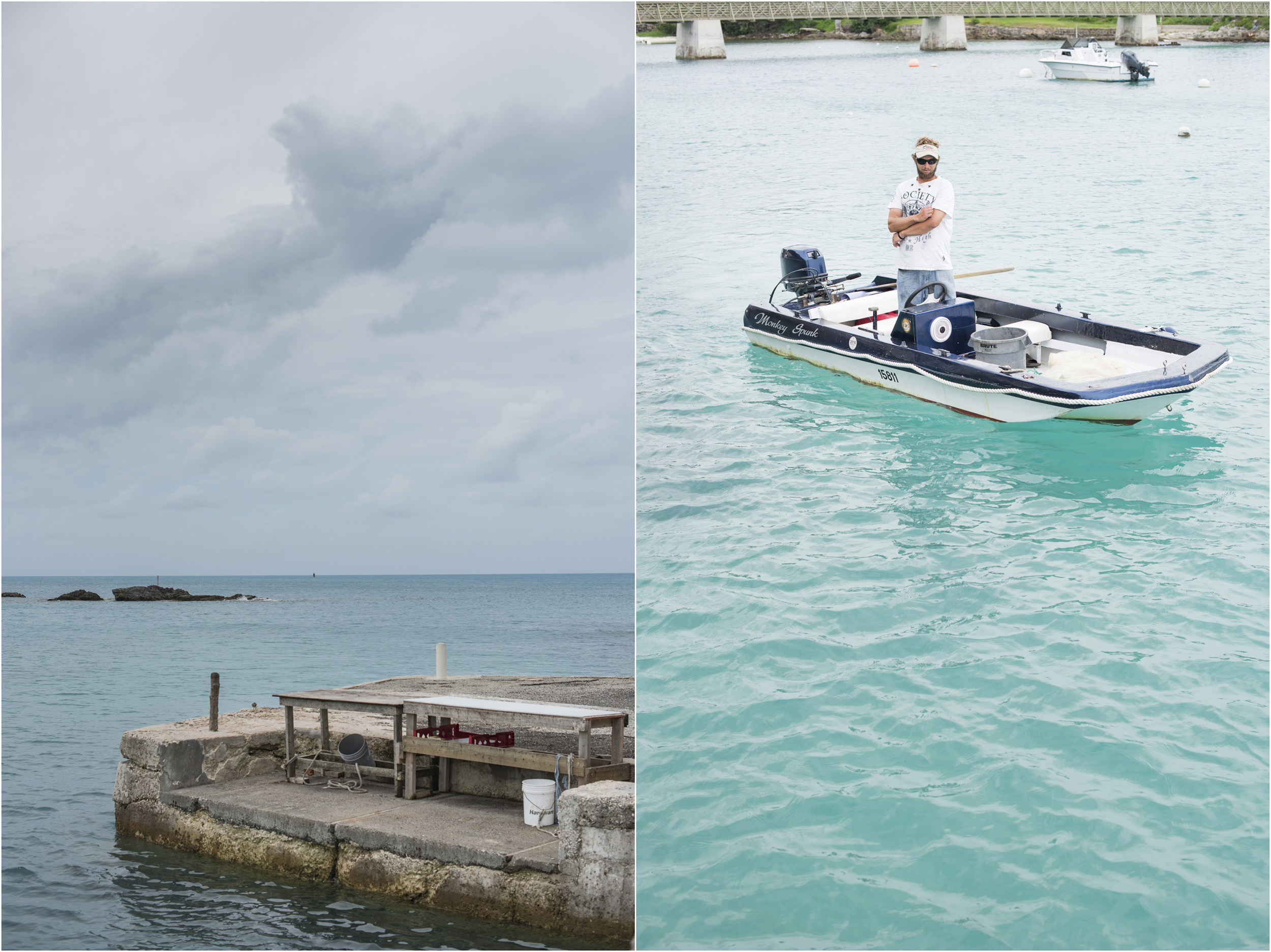
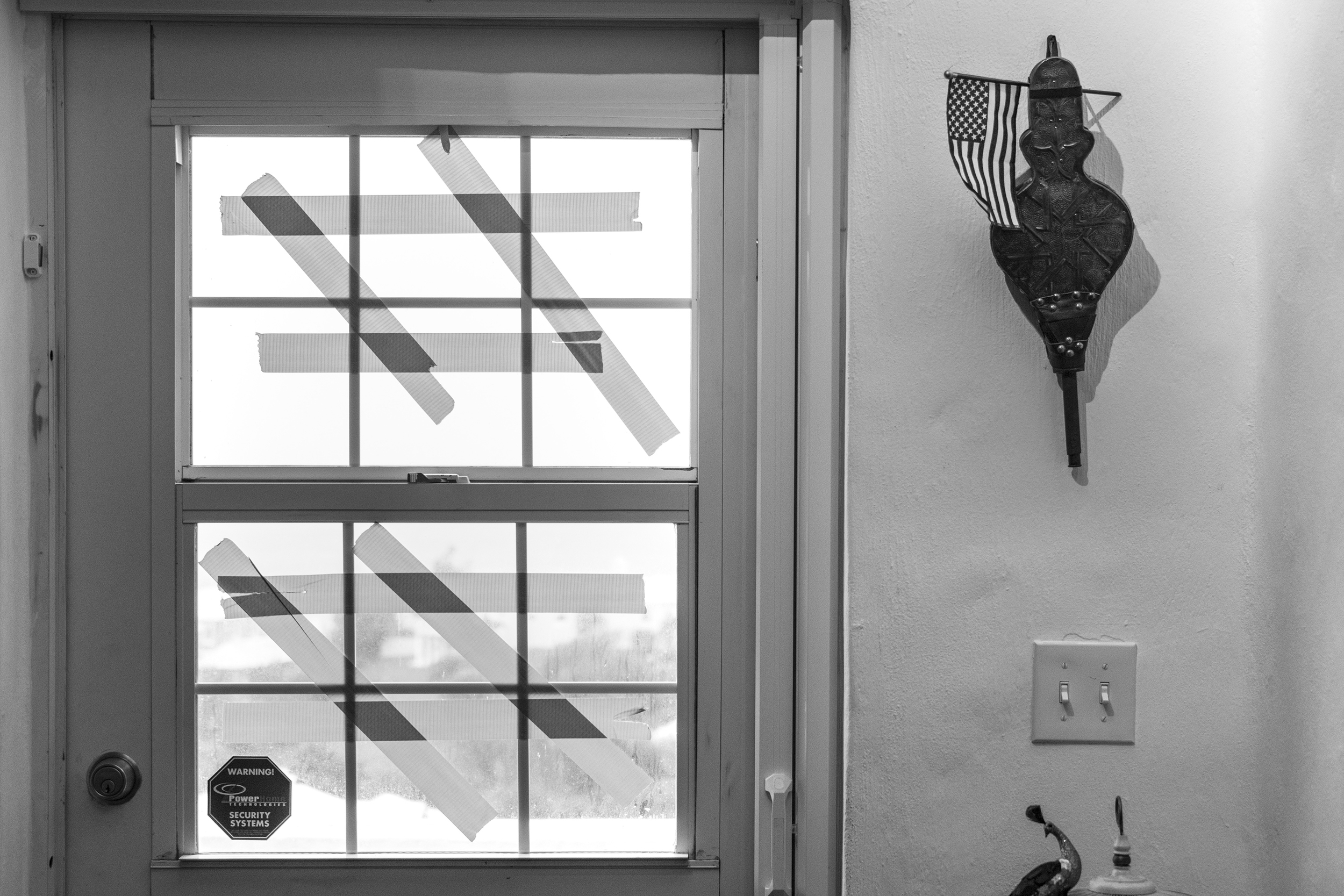
Once Troubadour was anchored down and ready for Joaquin, we continued to board up the houses. We started with our property, which is up at the top of a hill. This time last year, Bermuda was hit by Hurricane Fay and Gonzalo within a span of 5 days. We lost our roof in both of these hurricanes, and we were not taking any chances with Joaquin. We secured some of the rooms from the outside and some from the inside. The Laundry Room door was even sealed! Just to ensure we had a little "greenery" around the house after the storm, I moved all of the plants indoors to protect them from the 80mph wind. Before we left the house, I slapped some ducktape on the windows to ensure they wouldn't shatter all over the place if broken by debris.
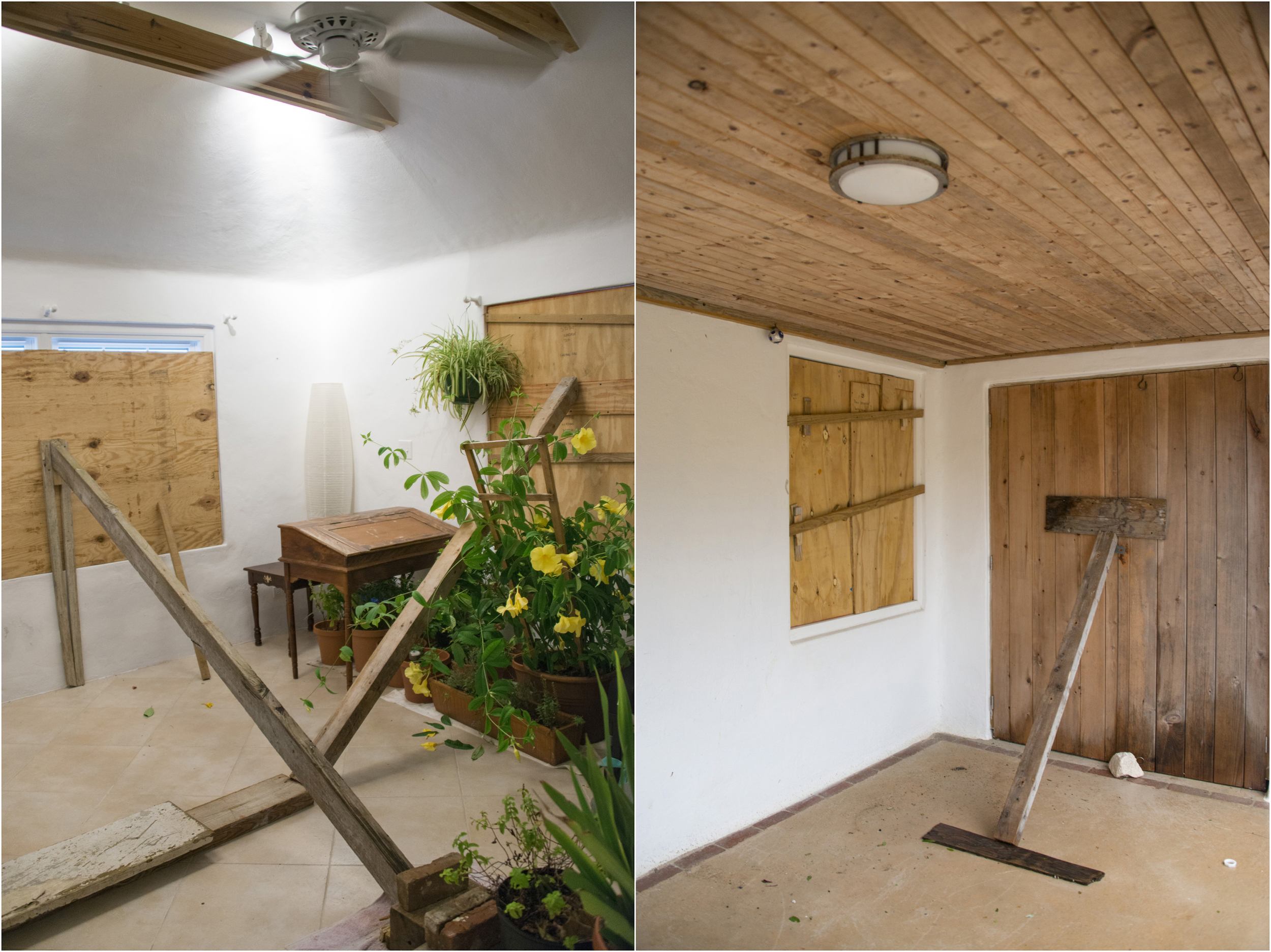
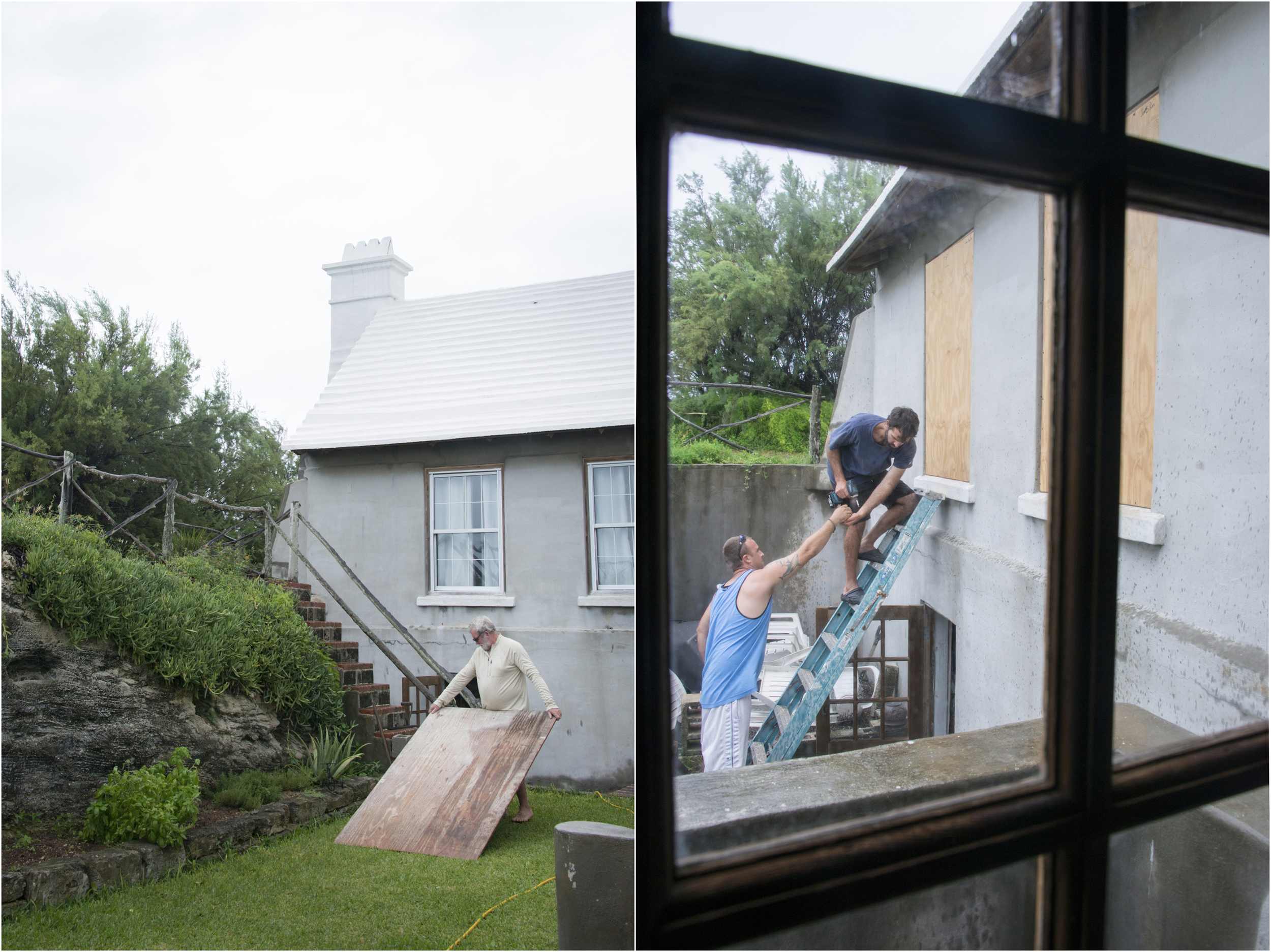

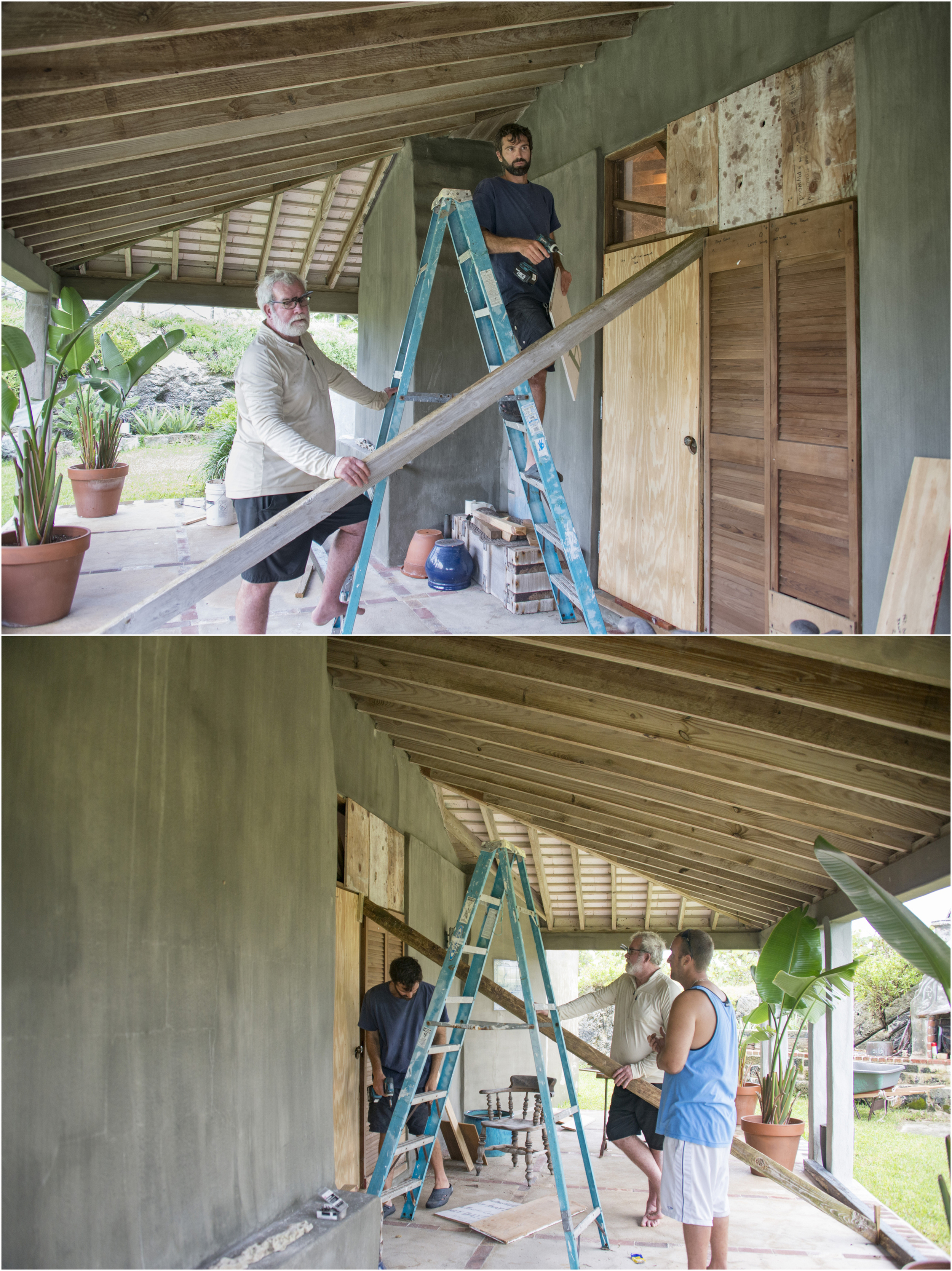
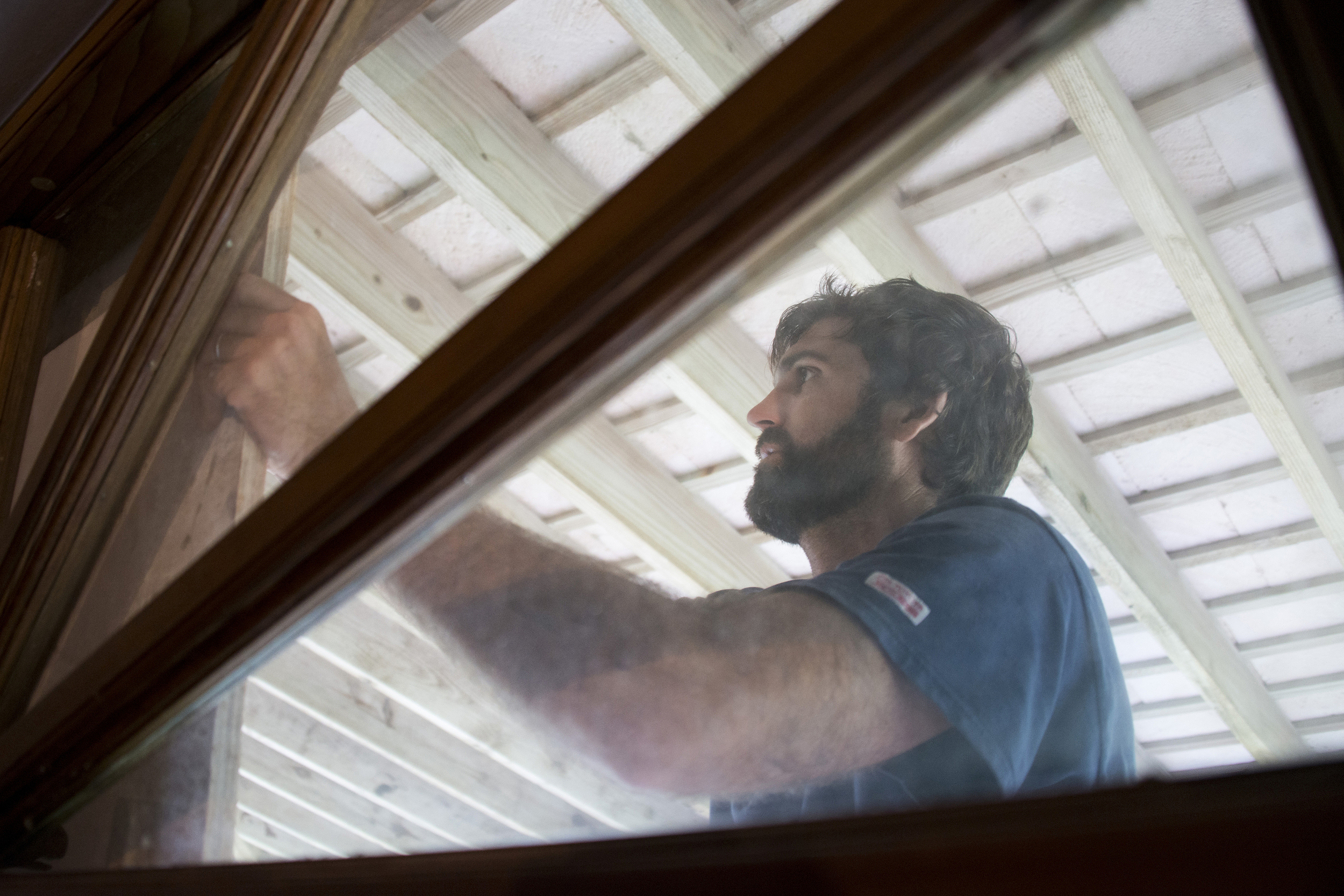
Once our house was complete, we moved over to Jim's parent's house. Although situated by the water, the house, built by my father-in-law, sits low and is shielded by a small hill. My in-laws' house is a bit safer than ours in terms of structure, and this is where we would be spending the hurricane. Not to mention, everyone feels safer when there are a few parents around; Jim's parents are hurricane pros! Once their house was boarded up, we watched as the waves morphed from nonexistent to reckless.
I watched through the bedroom window as Jim and his mom wrestled to move a palm tree down a flight of steps to keep it from getting wind-whipped. The phones rang every 20 to 30 minutes; relatives and friends calling to "check in." Ring! I picked up the phone to hear a very polite and calm voice on the other end asking for my husband, "Good Afternoon, this is Stevie - is Jim available please"? A simple question that would have been normal on any other day, although today - as we're preparing for a hurricane - seemed entirely out of place.
I replied, "Uhm - yes, he's here, although he is currently carefully inching a palm tree down a flight of steps". Stevie said, "Oh, well - I'm calling about Troubadour". With those few words, the pit in my stomach grew bigger. Stevie explained to me that another boat had come loose and had become tangled in Troubadour's line. Given that Jim was still wrestling that 50-pound palm tree, I passed the phone to Blake. The look on his face as he sat on the phone said it all: our boat may be in danger of being damaged, or worse yet, sinking. Troubadour is our livelihood; it's how our family makes a living. Blake built the boat during the late 1970s and early 1980s; just as Jim was "coming onto the scene". In a sense, Jim was raised right alongside good ole "Trouby" - as I sometimes call her. Without little knowledge of what was actually going on with the boats, Jim was ready to hop in the car and head to the mooring. I, however, was very hesitant to leap into a car during the middle of a hurricane for many reasons but mainly because, I knew that if the boat were in danger, it could be repaired. Jim's life, on the other hand, might not be.
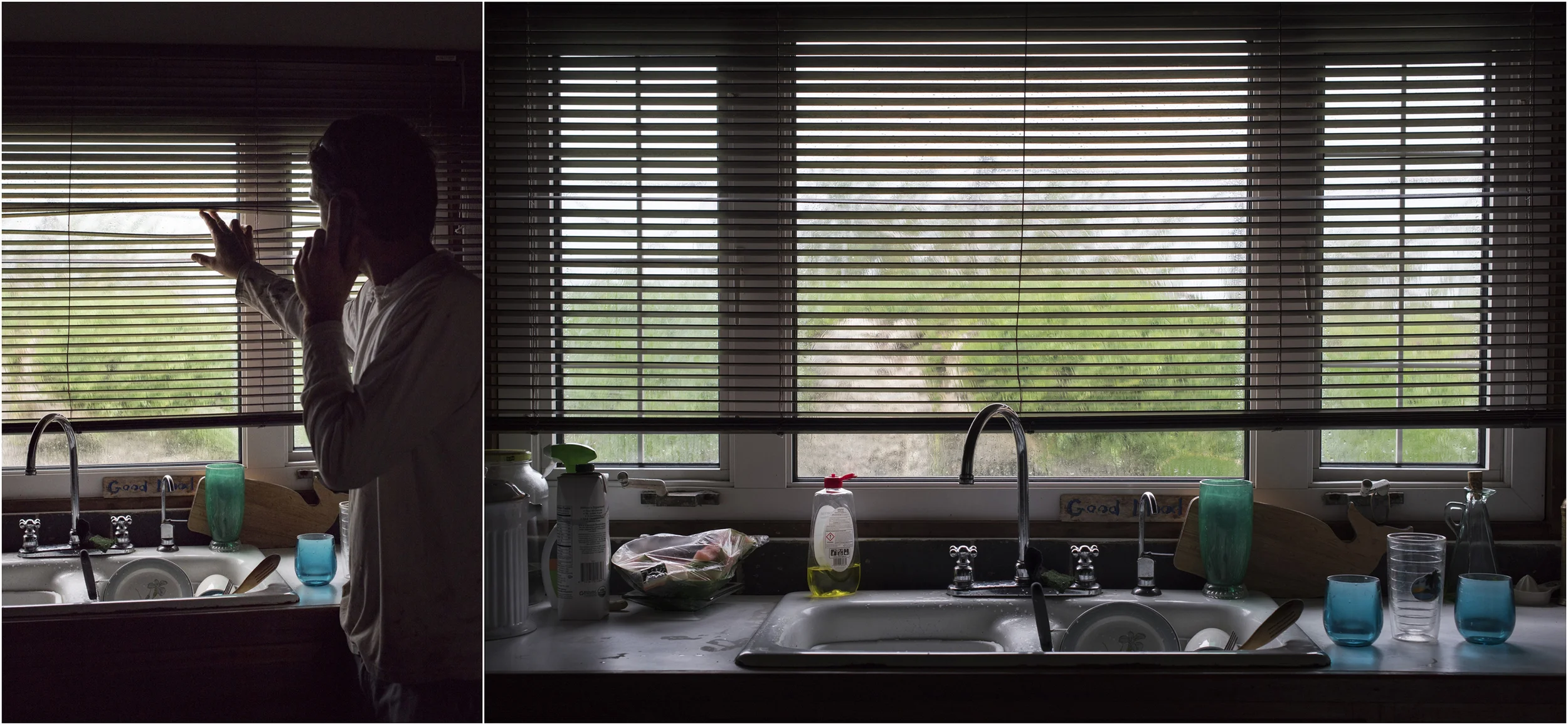
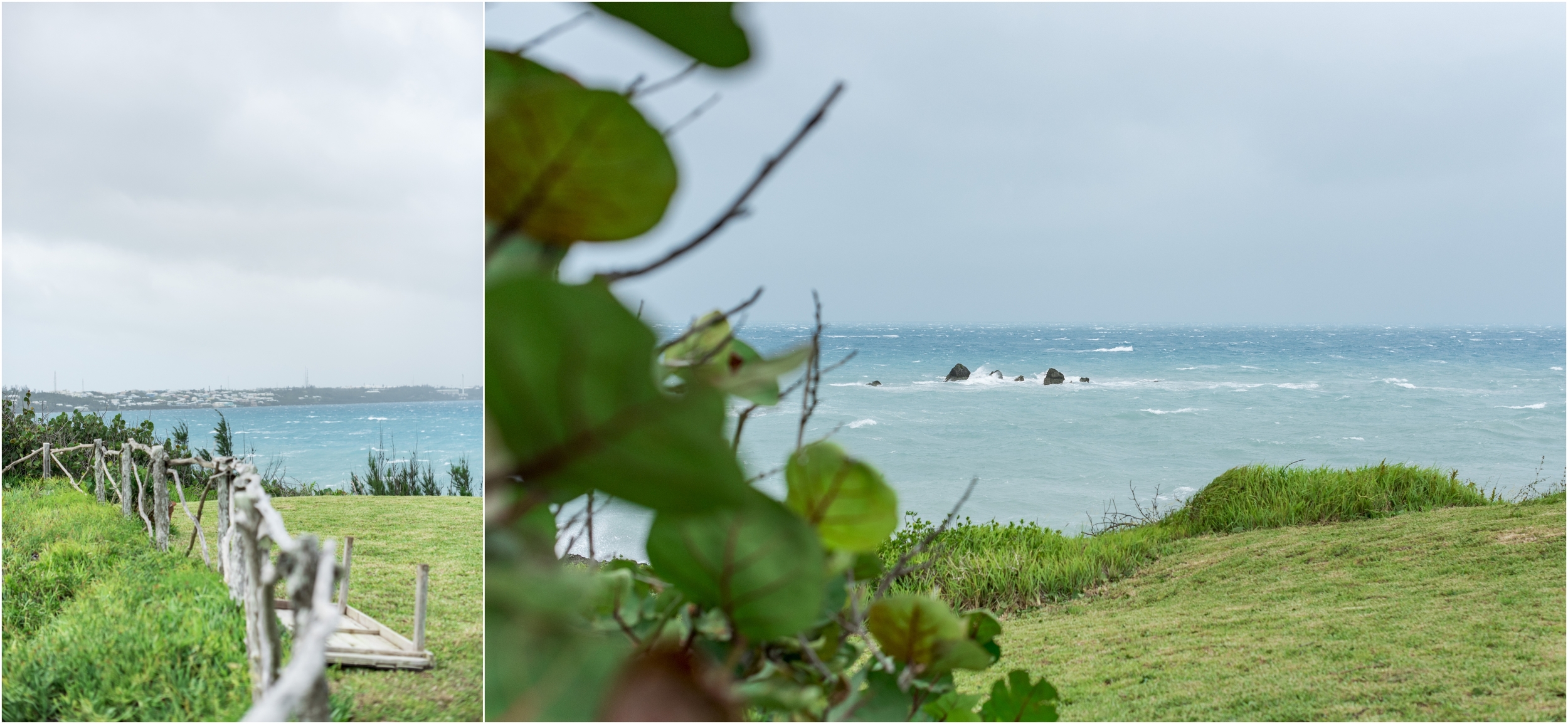
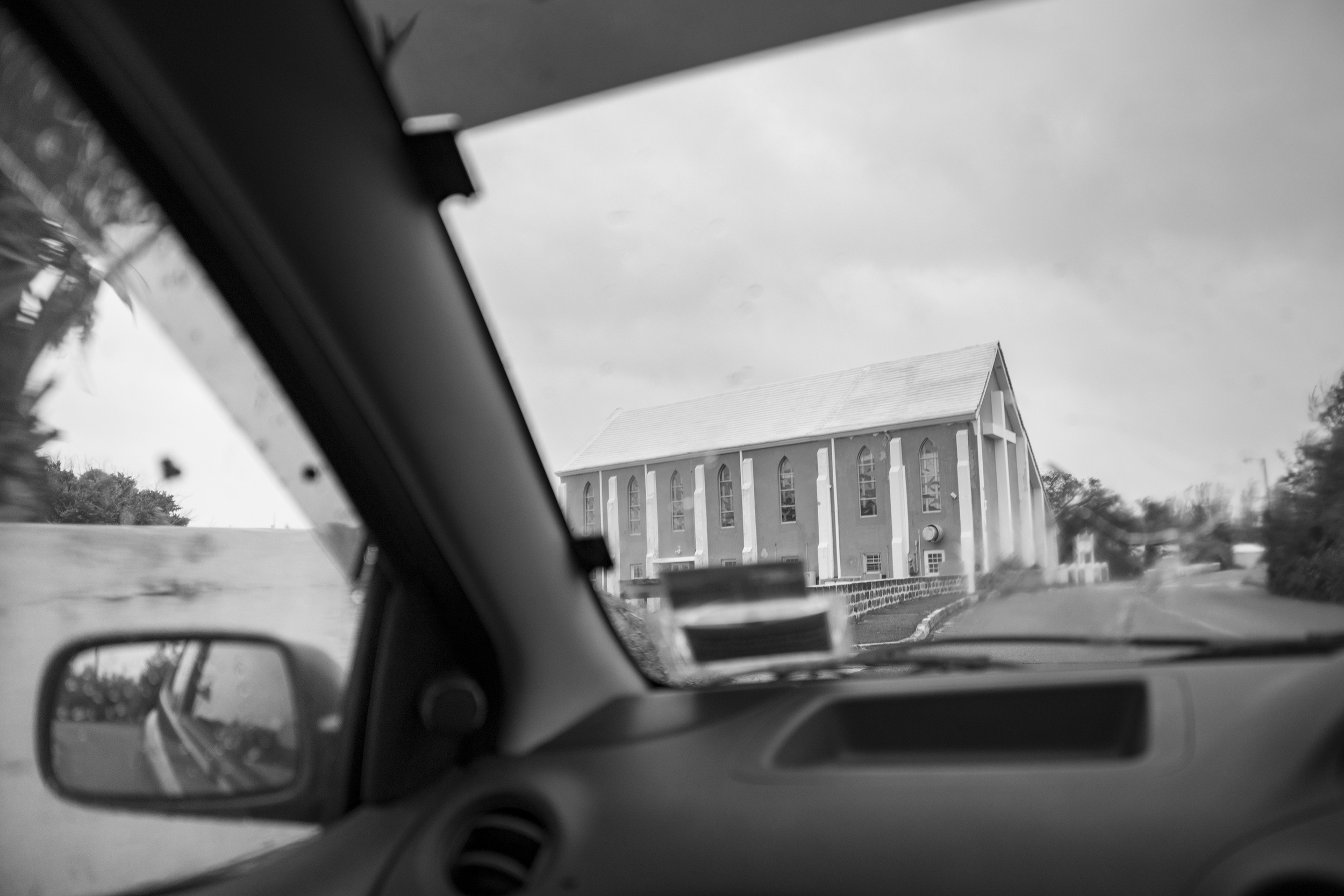
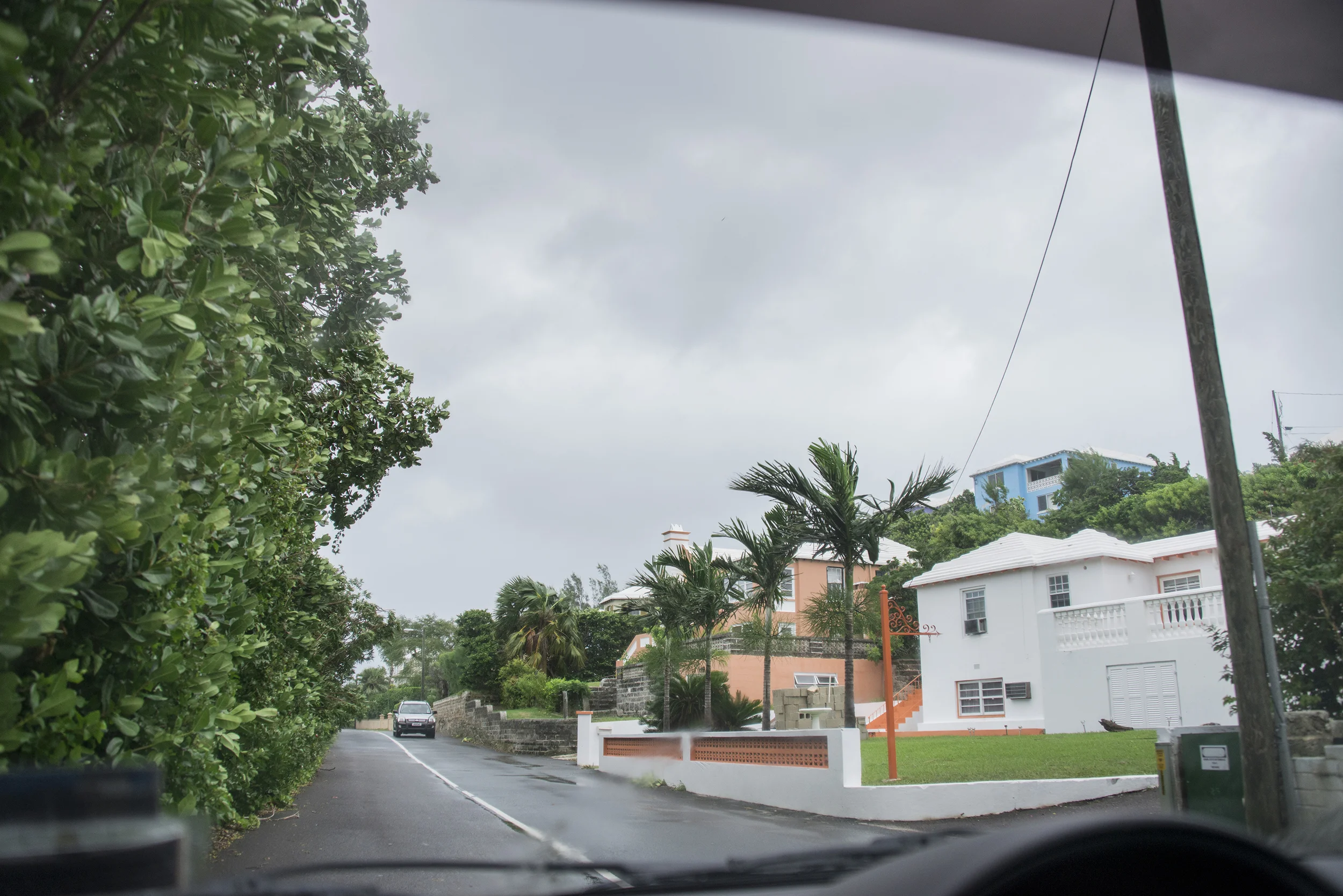
Blake and Jenny, Jim's mom, decided to stay and make sure the house was okay. During a hurricane, it's important to have someone stay at a house if the need arrises to go out into a storm. For example, a brace may need to be adjusted if the wind changes direction.
Thinking the truck might be more safe to ride off into a storm in, I suggested we move our car out of the driveway. No time. Jim was determined to get on the road as soon as possible and our car was readily available. So, we took off in an 11 year old Toyota Yaris. (And to this day - I will continue to swear by Toyota!) As soon as we left his parent's house, we passed one of the Bermuda Telephone Company trucks. Hand gestures were exchanged between the driver and Jim, who was behind the wheel; almost as to say, "You're out in this crazy wind too? Be safe... be safe." Once we got onto the main road, I was surprised to see other cars out as well. What shocked me the most was seeing a few walkers and joggers. But... hey - maybe they were on the way to their own boat too!
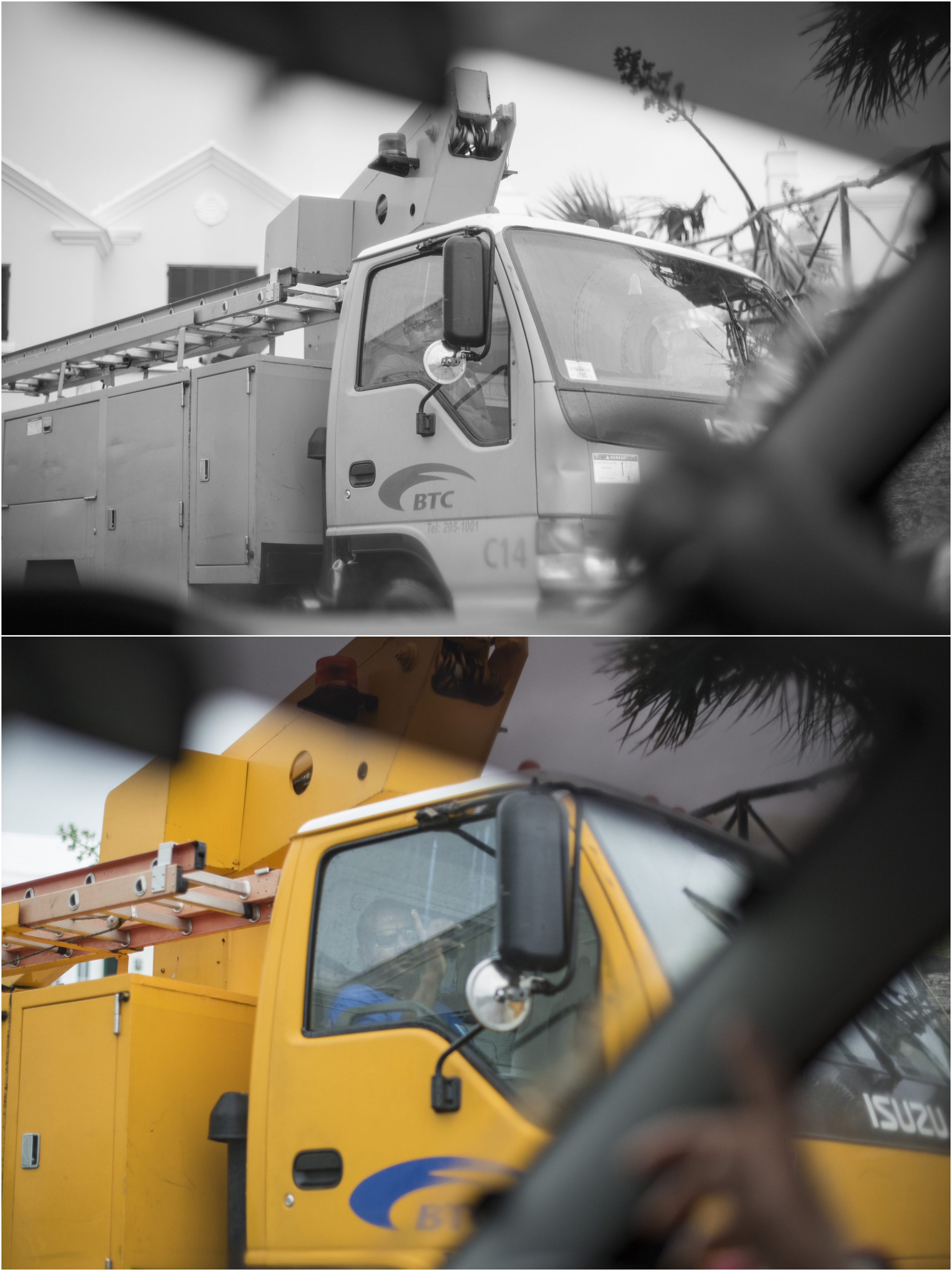
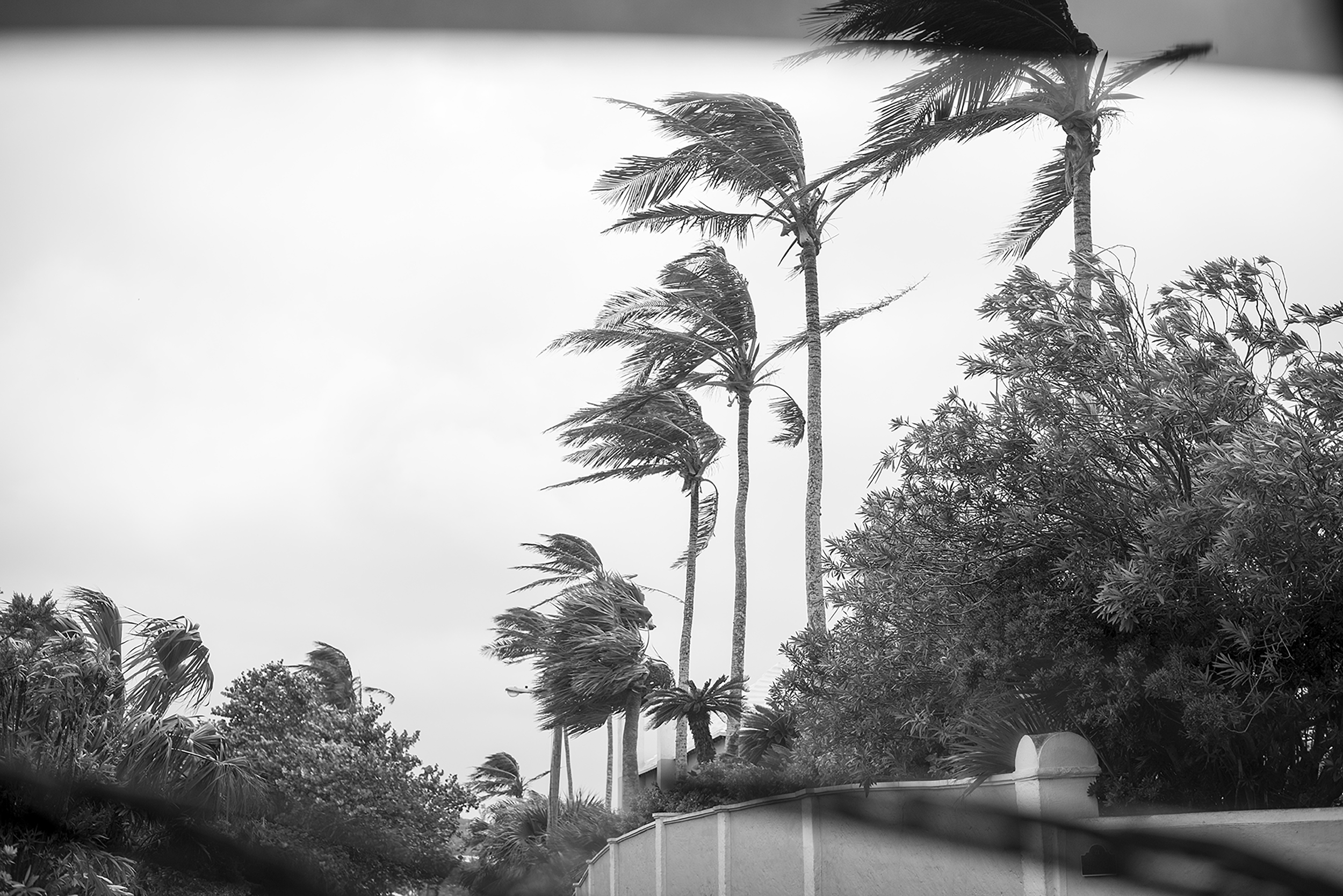
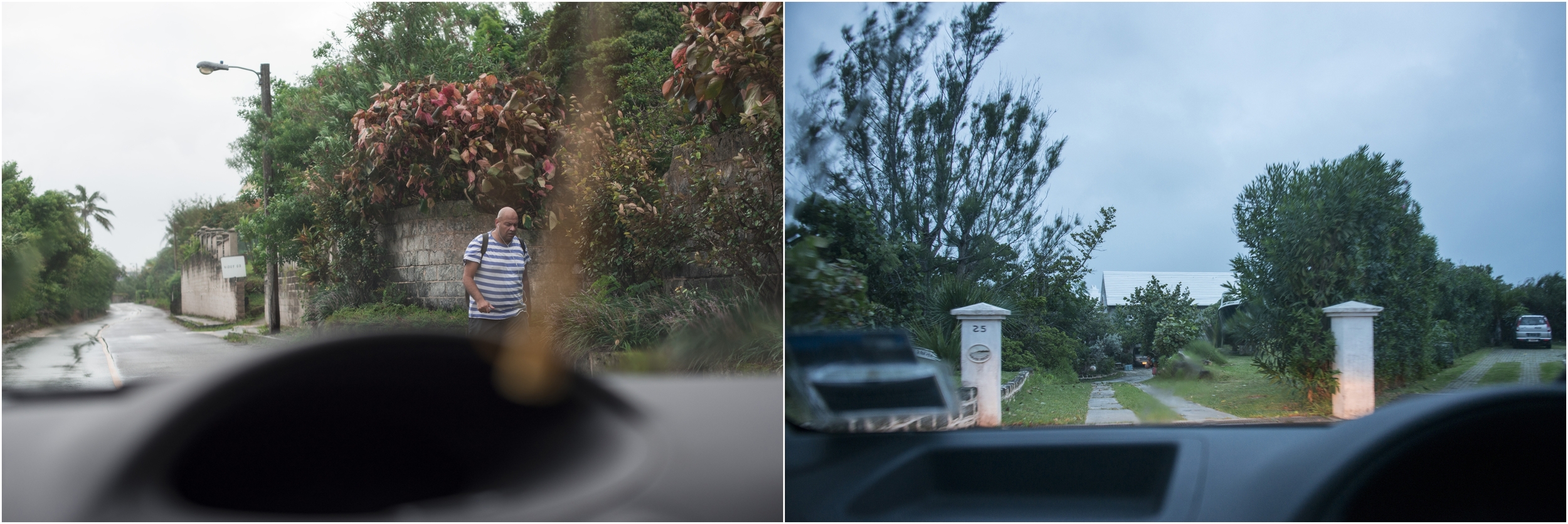
We continued our "Magical Mystery Tour" towards the boat. On the ride down, I dialed a few phone numbers frantically; trying to seek out another set of hands for help or get an update on our boat from folks in the area. In attempts to get a hold of Roger, a family friend, and another fisherman, Jim rattled off a few numbers off the top of his head: 704-23... 68? 58? 705-2367? Three of my attempts resulted in a recording stating, "The number you are trying to reach is not in service" or "...is not a working number". When you're in a state of panic, it's harder to remember a phone number you dial frequently.
We were a bit desperate to reach Roger because he lives close by to our hurricane mooring and we thought that he may have been able to see our boat and give an update. Not to mention, Roger is fearless. We knew he would be just as willing as we were to go out into the middle of a hurricane to help. This is a man who usually sits on his boat during a hurricane - just in case anything goes wrong during a storm. Again, a fisherman/woman's boat is one's livelihood. A boat surviving a storm is key, and precautions must be taken. Unfortunately, we could not remember the last two digits of Roger's phone number.
Next plan: call Paul, one of Jim's best friends from childhood. He's also a fisherman and a very savvy boatsman. His parents also lived close by to where we were headed. We wanted to ask if it would be okay to stay at their house if we "got stuck" after rescuing our boat. Paul's response, "Oh YAH", said with a strong Bermudian accent. "That's no problem; you can stay." After I had hung up with Paul, our cell phone rang. It was Jim's dad; he had gotten ahold of Roger who could see Troubadour from the dock by his house. She was safe. We're assuming that the smaller boat had untangled itself and moved on to its next victim. Once we heard that our boat was safe, we turned the car around and went home; unsure of what had happened - or what might happen - to the loose boat. We arrived home; pulled our car into the driveway and parked it far away from any trees that may come crashing down. We ran up the stairs, and I gleefully skipped into the kitchen. Jim's mom reached out for a hug and happily said, "Yay! Well done you two". This was not Jim's first experience jetting out into a storm to save Troubadour... but it was certainly mine. And I was glad it was over! We resumed our positions around the kitchen counter. Hovering over the phone; waiting for the next phone call about Troubadour... which hopefully, wouldn't come.